Thursday, 15 August 2013

Friday, 19 July 2013
Barmageddon
The World's End
Director: Edgar Wright
Stars: Simon Pegg, Nick Frost, Paddy Considine

Ten years after the release of rom-zom-com Shaun Of The Dead, and five after the big-cop-little-town action comedy Hot Fuzz; Edgar Wright, Simon Pegg and Nick Frost's "Cornetto Trilogy" draws to a close with The World's End.
The film sees the charismatic Gary King (Simon Pegg) return to his hometown with his boyhood friends (Nick Frost, Paddy Considine, Martin Freeman and Eddie Marsan) after corraling them into completing the pub crawl they failed to finish when they leaft school in the early nineties. However, everything is not as it seems in Newton Haven, and the five friends soon find themsleves battling nostalgia, maturity, alienation and asimilation all the way to The World's End.
For fans of the previous "Cornetto" films, there is a lot to love about this final offering. Simon Pegg and Edgar Wright's script boasts the familiar intertextuality, repeated dialogue and big action in little English pubs, that made their previous films so hilarious and popular. The story also ties up the trilogy nicely, as a group of friends crack in-jokes whilst fighting off the apocalypse in a pub, whilst also attempting to uncover a sinister conspiracy involving the inhabitants of a small English town obsessed with maintaining the status quo.
However, that's not to say that this movie doesn't bring something new to this incredibly funny trilogy. Whilst not an obvious genre pastiche like its predecessors, the movie is more a cultural satire commenting on conformity, consumerism and conservatism in a nation that is in grave danger of losing the last dregs of its individuality. The pubs no longer have jukeboxes on random, and guns above the bar; instead they've been replaced by a series of identical, bland boozers devoid of personality. The World's End is therefore a fitting ending to the "Cornetto Trilogy", because we're no longer laughing at the juxtaposition of genre films set in Britain, but instead we're laughing that the British could easily have become a race of souless robots without anybody noticing.
The World's End is a hilarious, intelligent and emotional close to an arguably perfect trilogy. Wright's signature stylish direction, coupled with an insightful script, mark the end of an excellent decade for everyone involved in the trilogy with the Midas touch. How's that for a slice of fried gold?
9 / 10
Director: Edgar Wright
Stars: Simon Pegg, Nick Frost, Paddy Considine

Ten years after the release of rom-zom-com Shaun Of The Dead, and five after the big-cop-little-town action comedy Hot Fuzz; Edgar Wright, Simon Pegg and Nick Frost's "Cornetto Trilogy" draws to a close with The World's End.
The film sees the charismatic Gary King (Simon Pegg) return to his hometown with his boyhood friends (Nick Frost, Paddy Considine, Martin Freeman and Eddie Marsan) after corraling them into completing the pub crawl they failed to finish when they leaft school in the early nineties. However, everything is not as it seems in Newton Haven, and the five friends soon find themsleves battling nostalgia, maturity, alienation and asimilation all the way to The World's End.
For fans of the previous "Cornetto" films, there is a lot to love about this final offering. Simon Pegg and Edgar Wright's script boasts the familiar intertextuality, repeated dialogue and big action in little English pubs, that made their previous films so hilarious and popular. The story also ties up the trilogy nicely, as a group of friends crack in-jokes whilst fighting off the apocalypse in a pub, whilst also attempting to uncover a sinister conspiracy involving the inhabitants of a small English town obsessed with maintaining the status quo.
However, that's not to say that this movie doesn't bring something new to this incredibly funny trilogy. Whilst not an obvious genre pastiche like its predecessors, the movie is more a cultural satire commenting on conformity, consumerism and conservatism in a nation that is in grave danger of losing the last dregs of its individuality. The pubs no longer have jukeboxes on random, and guns above the bar; instead they've been replaced by a series of identical, bland boozers devoid of personality. The World's End is therefore a fitting ending to the "Cornetto Trilogy", because we're no longer laughing at the juxtaposition of genre films set in Britain, but instead we're laughing that the British could easily have become a race of souless robots without anybody noticing.
The World's End is a hilarious, intelligent and emotional close to an arguably perfect trilogy. Wright's signature stylish direction, coupled with an insightful script, mark the end of an excellent decade for everyone involved in the trilogy with the Midas touch. How's that for a slice of fried gold?
9 / 10
Sunday, 16 June 2013
John Carter of Krypton
Man Of Steel

Dir:
Zack Snyder
Stars:
Henry Cavill, Amy Adams, Michael Shannon

After
the all-round disaster that was Batman & Robin, the colourful and
eccentric Batman films of the nineties descended to nothing more than a
hard-nippled joke, and the franchise seemed impossible to continue. However,
Christopher Nolan’s Dark Knight trilogy managed to reboot the hero
through character-driven narrative, compelling villains, insightful social
commentary and ambitious, live-action set pieces – resulting in a trilogy that
was both commercially and critically successful. So when I saw Nolan’s name
attached to the seemingly brooding, and almost arthouse, trailer for Man Of
Steel I expected the Nolan magic was going to be at work again.
Of
course, in my excitement, I had foolishly overlooked the director credit for
Zack Snyder whose last three films (Watchmen, Legends Of The
Guardians: The Owls Of Ga’Hoole and Sucker Punch) had all been
big-budget flops at the domestic box office that were panned by critics. This
realisation dawned on me very quickly as I struggled to stay awake through
nearly two and half hours of loud, dumb CGI set-pieces, strung together with
empty dialogue from humourless, undeveloped characters.
Man
Of Steel is such an omnishambles
that it is difficult to ascertain what Zack Snyder was actually attempting to
achieve. After some explosive CGI battle scenes and Russell Crowe fighting all
over the world, Kal-El is sent away from Krypton in an inter-galactic Moses
basket to the planet Earth. His realisation of his true identity, and the
development of his strengths, is dealt with in as little time as possible in
order to make way for some more big CGI explosions. When there is dialogue, it
is humourless, dull and far more pseudo-philosophical than the crass,
thrill-less set pieces that it punctuates.
If
Snyder set out to make a serious and brooding Dark Knight-style
superhero film, then he has failed spectacularly as Man Of Steel has a
total absence of character exploration, interest in a believable villain or real, live-action jeopardy; which leaves the remaining dialogue sounding incredibly
clumsy. Moreover, in The Dark Knight Batman had to go into hiding for
seven years as the deaths of two characters may have shaken the hope of the
people; yet the millions of human deaths and the billions of dollars of damage
caused by Superman during the city battle in Man Of Steel don’t even
weigh slightly on his conscience. Instead, he is called a hero and thanked for
saving the day, whilst Metropolis slowly burns to the ground behind him. I
wouldn’t have been surprised if “America, F*** Yeah!” played over the credits.
Of
course, not all superhero films have to be dark and cerebral – look at last
year’s Avengers, which was a fun, mega-budget blockbuster that featured
huge CGI battles in the middle of cities, and an ensemble cast of well-known
actors playing entertaining and likeable characters. If Man Of Steel is
trying to replicate the broad, blockbuster action of Avengers then
unfortunately it fails yet again. There is a total vacuum of charisma and
humour from the movie’s stars, and it is an uphill struggle for the audience to
enjoy being in the company of any of its characters. The only possible laughs
this boring and asinine Superman movie can offer are ironic sniggers at the
sheer stupidity of Snyder’s grandiose treatment of a meaningless blockbuster.
It
was perhaps naïve to think that Christopher Nolan’s influence as producer could
reboot Superman with the same success as Batman Begins. Yet, as Zach
Snyder is already announced to be directing the sequel, Man Of Steel may
just be the first in a long line of boring, loud, inane, joyless and
underwhelming movies, overloaded with CGI and void of any jeopardy or charisma.
2 / 10
2 / 10
Tuesday, 14 May 2013
You Will Be Entertained. Resistance Is Futile.
Star Trek: Into Darkness (IMAX 3D)

After superbly rebooting the franchise with Star Trek in 2009, J.J. Abrams returns to direct what will probably be his probably final Trek film before crossing over to a galaxy far, far away. However, if Star Trek Into Darkness is anything to go by, Star Wars: Episode VII could actually be a very exciting prospect.
Director: J.J. Abrams
Stars: Zachary Quinto, Chris Pine, Benedict Cumberbatch

After superbly rebooting the franchise with Star Trek in 2009, J.J. Abrams returns to direct what will probably be his probably final Trek film before crossing over to a galaxy far, far away. However, if Star Trek Into Darkness is anything to go by, Star Wars: Episode VII could actually be a very exciting prospect.
Into Darkness bursts onto the screen with the crew of The USS Enterprise negotiating their obligations to the Prime Directive, whilst one of their number seems destined to die in a fiery volcano. This beautifully coloured and perilous set piece sets the tone for the entire film; as upon their return to Earth, Spock and Kirk immediately become involved in a deadly psychological chess game with the terrorist super-villain John Harrison, played astutely by Benedict Cumberbatch. In keeping with Abrams’ love of mystery, it is best not to spoil the surprises in store by divulging anything further about the plot. However, I will say that the story promises a two-hour bombardment of jeopardy, action, plot twists, mind games, in-jokes, excellent character development, stylish set pieces, and surprisingly gut-wrenching emotional investment.
As a Trek-literate film fan, rather than a full-blown Trekkie, I think its safe to infer from the audience reaction at my IMAX midnight screening that the film is as hugely entertaining for series newcomers as it is for überfans. Whilst it would probably be advisable to watch Star Trek (2009) and perhaps even The Wrath Of Khan to fully appreciate the character development and insider references – Abrams’ gorgeous direction and colourful cinematography combines with an excellent script and dynamic performances from the ensemble cast to produce undoubtedly the finest Trek film, and perhaps even one the most enjoyable blockbusters, ever made.
If the 2009 reboot was Star Trek’s Batman Begins, Into Darkness is the franchise’s Dark Knight. Fantastic set pieces, superb cinematography, a strong, chaotic villain and the rise of a great hero after a tragic loss. I strongly advise trekking to your nearest IMAX screen to explore strange new worlds, seek out new life and new civilizations, and boldly go where no fan has gone before.
9 / 10
Thursday, 28 March 2013
Brainspotting
Trance

After directing the bombastic British Olympic opening ceremony, (Sir) Danny Boyle’s next feature was always going to seem a little understated. Trance is a psychological crime thriller that sees fine art auctioneer Simon (McAvoy), suffer from memory loss after the botched robbery of a multi-million pound piece. Under pressure from the criminals who orchestrated the heist, a hypnotherapist is recruited in an attempt to locate the missing painting, the whereabouts of which are deeply hidden within Simon’s subconscious mind.
Director: Danny Boyle
Stars: James McAvoy, Rosario Dawson, Vincent Cassell

After directing the bombastic British Olympic opening ceremony, (Sir) Danny Boyle’s next feature was always going to seem a little understated. Trance is a psychological crime thriller that sees fine art auctioneer Simon (McAvoy), suffer from memory loss after the botched robbery of a multi-million pound piece. Under pressure from the criminals who orchestrated the heist, a hypnotherapist is recruited in an attempt to locate the missing painting, the whereabouts of which are deeply hidden within Simon’s subconscious mind.
Strongly channelling the likes of Christopher Nolan’s fantastic Memento and Inception, Boyle’s direction helps to deal with the theme of amnesia in a very mature and intricate way. As the plot unravels, so too does Simon’s psyche; and the deeper the audience delves into the recesses of his mind, the greater the reward in terms of tension, emotion and characterisation. Similar to Hitchcock’s Spellbound, the films most intriguing moments are the sequences that take place within the protagonist’s subconscious, and the direction during these scenes sit nicely amongst Boyle’s credible filmography.
However, whilst both of Nolan’s memory thrillers are rewardingly concluded, Joe Ahearne and John Hodge’s screenplay for Trance seems to fall apart a little towards the end. For a film in which the stakes are constantly high due to money, greed, mistrust, sexuality and psychology – the dénouement seems to tie up the drama somewhat clumsily, which undermines the final set piece and leaves it feeling a little televisual. There are also a couple of moments within Trance, both involving genitals, which seem a little out of place given the film’s broader themes – with one shot resulting in spontaneous laughter during my screening.
Although the film is a little untamed and features some baffling choices in terms of story, there is a lot within Trance to enjoy. Danny Boyle’s stylish direction helps to smooth over the mistakes within the screenplay and results in a gripping, interesting and hypnotic crime movie that for the most part keeps the audience guessing.
7 / 10
Sunday, 3 March 2013
The 2012 PurpleMonkeyBird Awards
BEST DIRECTORAL DEBUT



 Life Of Pi
Prometheus
Avengers
Cloud Atlas
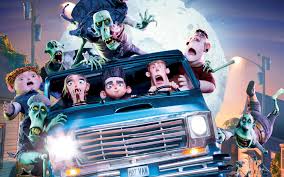 Paranorman
The Pirates! In An Adventure With Scientists
 Wally Pfister - The Dark Knight Rises
Roger Deakins - Skyfall
Robert Richardson - Django Unchained
Mihai Malaimare Jr. - The Master
Dariusz Wolski - Prometheus

 Christoph Waltz – Django Unchained

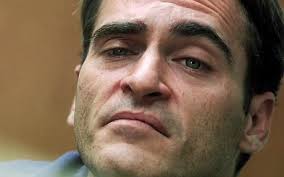 Joaquin Phoenix – The Master
Jake Gyllenhaal – End Of Watch

Argo
A Royal Affair
21 Jump Street
 Quentin Tarantino - Django Unchained
Joss Whedon - The Cabin In The Woods
Martin McDonagh - Seven Psychopaths
 Christopher Nolan – The Dark Knight Rises
Quentin Tarantino – Django Unchained
Into The Abyss
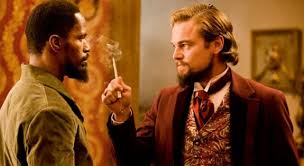 Django Unchained
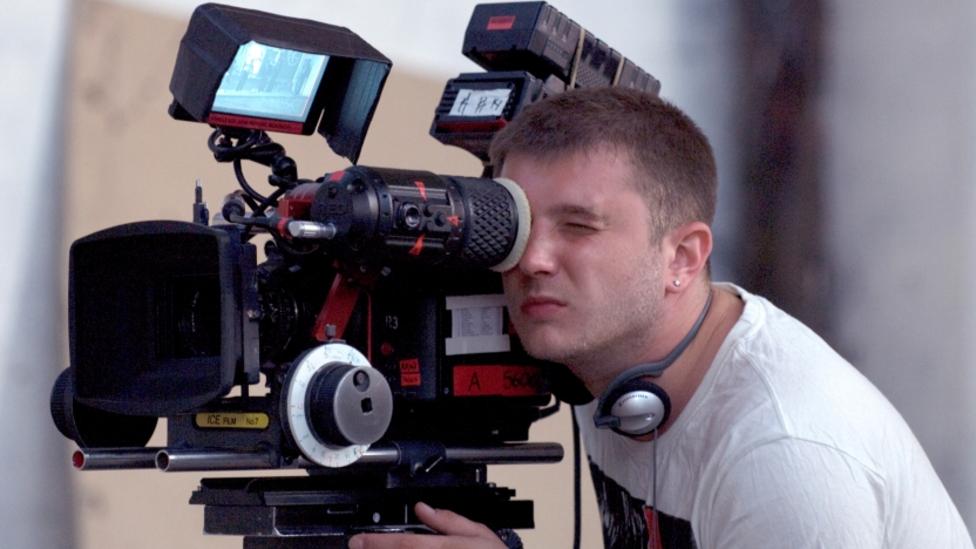
Ben Drew - iLL Manors
Stephen Chbosky - Perks Of Being A Wallflower
Drew Goddard - The Cabin In The Woods
Timo Vuorensola - Iron Sky
Wayne Blair - The Sapphires
Seth MacFarlane - Ted
BEST SCORE

Hans Zimmer - The Dark Knight Rises
Howard Shore - The Hobbit: An Unexpected Journey
Johnny Greenwood - The Master
Thomas Newman – Skyfall
Tom Tykwer, Johnny Klimek & Reinhold Heil - Cloud Atlas
Nick Cave - Lawless
BEST SOUNDTRACK
Searching For Sugar Man
iLL Manors
Django Unchained
Marley
The Sapphires
Hunky Dory
BEST SPECIAL VISUAL EFFECTS

Prometheus
Avengers
Cloud Atlas
The Dark Knight Rises
The Hobbit: An Unexpected Journey
BEST ANIMATED FILM
The Pirates! In An Adventure With Scientists
Frankenweenie
Brave
Wreck-It Ralph
BEST CINEMATOGRAPHY

Roger Deakins - Skyfall
Robert Richardson - Django Unchained
Mihai Malaimare Jr. - The Master
Dariusz Wolski - Prometheus
Greig Fraser - Killing Them Softly
BEST ACTRESS IN A SUPPORTING ROLE

Anne Hathaway – Les Miserables / The Dark Knight Rises
Jessica Chastain – Lawless
Amy Adams – The Master
Doona Bae – Cloud Atlas
Juno Temple – Killer Joe
Judi Dench – Skyfall
BEST ACTOR IN A SUPPORTING ROLE

Philip Seymour Hoffman – The Master
Samuel L Jackson – Django Unchained
Michael Fassbender - Prometheus
Jim Broadbent – Cloud Atlas
Matthew McConaughey – Killer Joe / Magic Mike
Matthew McConaughey – Killer Joe / Magic Mike
BEST ACTRESS IN A LEADING ROLE

Quvenzhané Wallis – Beasts Of The Southern Wild
Jennifer Lawrence - Silver Linings Playbook
Alice Lowe - Sightseers
Elizabeth Olsen – Martha Marcy May Marlene
Brit Marling – The Sound Of My Voice
Alicia Vikander – A Royal Affair
BEST ACTOR IN A LEADING ROLE
Jake Gyllenhaal – End Of Watch
Omar Sy – Untouchable
Daniel Day-Lewis - Lincoln
Mads Mikkelsen – A Royal Affair
Denzel Washington – Flight
BEST ADAPTED SCREENPLAY

Cloud Atlas
Perks Of Being A WallflowerArgo
A Royal Affair
21 Jump Street
Life Of Pi
BEST ORIGINAL SCREENPLAY

Joss Whedon - The Cabin In The Woods
Martin McDonagh - Seven Psychopaths
Alice Lowe & Steve Oram - Sightseers
Chris Butler - Paranorman
David Ayer - End Of Watch
BEST DIRECTOR

Quentin Tarantino – Django Unchained
Paul Thomas Anderson – The Master
Ben Affleck – Argo
Ben Drew – iLL Manors
Gareth Evans – The Raid
BEST DOCUMENTARY
 The House I Live In
The Imposter
Into The Abyss
Searching For Sugar Man
West Of Memphis
The Invisible War
Marley
Side By Side
The Queen Of Versailles
McCullin
The Art Of Rap
You’ve Been Trumped
BEST FILM
iLL Manors
Sightseers
Untouchable
The Dark Knight Rises
The Hobbit: An Unexpected Journey
A Royal Affair
The Master
Paranorman
Cloud Atlas
Argo
The Cabin In the Woods
* (All qualifying films must have been released in the UK in 2012, or received a nomination for this year's OSCARs, BAFTAs, or Golden Globe Awards)
The Cabin In the Woods
* (All qualifying films must have been released in the UK in 2012, or received a nomination for this year's OSCARs, BAFTAs, or Golden Globe Awards)
Thursday, 21 February 2013
Six Degrees Of Innovation
Cloud Atlas
Dir: Andy & Lana Wachowski, Tom Tykwer
Stars: Tom Hanks, Halle Berry, Jim Broadbent, Doona Bae, Ben Whishaw, Jim Sturgess

Cloud Atlas is such a unique movie experience, it is likely to be difficult to describe concisely. Helmed by three directors who equally share directing credit, this genre-spanning epic features half a dozen loosely connected storylines set across five different centuries; and stars an ensemble cast of talented actors who portray a variety of characters unrestricted by race and gender. The project’s grand scope and talented cast are the product of an independently sourced $100 million budget – and by the end of its 170 minute runtime you feel as though you've experienced something overwhelmingly entertaining.
The movie’s six timelines each present narratives of varying genres, that all involve interconnected themes relating to the struggle of an individual against oppression. During the Gold Rush, an American working within the slave trade has his convictions challenged after witnessing acts of cruelty. In 1930s Cambridge, a young musician works to compose his masterpiece whilst corresponding with a distant lover. An LA journalist in the seventies must fight for her life whilst she attempts to uncover a conspiracy surrounding a corrupt nuclear energy corporation. A publisher in contemporary London receives a sudden windfall, only to then have to fight for his freedom after being falsely incarcerated. A clone in 22nd century Neo-Seoul attempts to spark a revolution after making a horrifying discovery. And a tribesman in a primitive, post-apocalyptic society struggles to defend his family from different invading forces.
The six stories develop simultaneously and follow similar narrative movements, despite cross-cutting between diverse genres and settings. The movie therefore has an incredibly unique vibrancy given its long running time, and even if particular scenes don’t fully engage the audience, something completely different may follow. Although the tone of consecutive scenes can differ between Blade Runner, Chinatown and Chicken Run; the exceptional editorial work, and thematically engaging script, help keep the audience entertained and invested despite the ever-changing characters and plots. The greatest success of Cloud Atlas perhaps lies in the ensemble cast, who offer flexible and dynamic performances - each able to cross several storylines to portray characters of different races and genders thanks to the work of an incredible prosthetics and make-up department.
Although likely to divide opinion due to its immense ambitions, Cloud Atlas is an undeniably groundbreaking movie experience that challenges the orthodoxy of cinematic narrative. In a year in which monotonous films of a similar runtime could dominate the Oscars, whilst dull action blockbusters are released by the bucketful – Cloud Atlas may be the first step in a bold new direction for ambitious storytelling and filmmaking.
9 / 10
Monday, 11 February 2013
Dial S For Sugarcoating
Hitchcock

Dir: Sacha Gervasi
Stars: Anthony Hopkins, Helen Mirren, Scarlett Johansson

Anthony Hopkins’ impressive impersonation of the legendary director in Hitchcock follows on six weeks after Toby Jones’ portrayal of Alfred Hitchcock in the BBC TV Movie, The Girl. Yet where The Girl was a haunting exploration of the auteur’s sexual aggression towards Tippi Hedren for a post-Saville audience; Hitchcock instead seeks to smooth over the rougher edges of history and character, in order to present a kinder and more uplifting drama, which ultimately leaves a rather unsatisfactory aftertaste.
Sacha Gervasi’s movie focuses on the period of Hitchcock’s career between the premieres of North By Northwest and Psycho. We follow the daring decisions made by a director who rejected offers from major studios at the apex of his career, in order to direct an independent and seemingly distasteful horror film based on the crimes of Ed Gein. Hitchcock’s self-doubt, marital paranoia and lecherous advances towards his leading lady mar the movie’s production; whilst stumbling blocks put in place by censors and distributors seem to doom the movie’s release. Although cinematic history dictates that Hitch will undoubtedly craft a masterpiece, Hitchcock’s jubilant ending is somewhat confusing if one cannot overlook the eponymous director’s obsessive voyeurism and clear misogyny.
As a huge admirer of the auteur’s filmography, of which I think Psycho is the magnum opus, I had hoped that this Hitchcock biopic would give a detailed insight into not only the difficulties of making such a groundbreaking film; but would also explore the character of a man who was himself a Freudian mess, and whose cruelty to his leading ladies is well-documented. Instead, the plot of Gervasi’s movie seemed to be more of an exercise in historical box ticking (despite several inaccuracies) and as a result the movie-making element of the screenplay is rather formulaic. The depiction of Hitchcock’s mental state allows for hallucinations of Ed Gein – which makes for an interesting portrayal of how a horror director must empathise with the grotesque. Yet at the same time, Hitchcock’s personal sexual depravity seems to be treated as an unfortunate quirk that we are meant to forgive by the end credits. If it wasn’t for the dignified, powerhouse presence of Helen Mirren, the film almost ventures into the territory of casual fifties sexism that it seeks to rebuke. Moreover, any attempt at redemption for the lead character is ultimately soured by the fact that Hitchcock is set just before the making of The Birds which, as aforementioned, was the production during which the director subjected Tippi Hedren to physical and mental degradation - before abruptly ending her career - because she refused his sexual advances.
Before watching Hitchcock, I got the feeling that as an enthusiast of the director’s work I may end up belonging to a minority who would enjoy watching a movie based around the production of Psycho. However, I now feel that the opposite may be true. Gervasi’s movie is a fairly successful light-hearted drama that largely ignores the severity of its main character’s misgivings. Whilst the acting performances are precise, the screenplay may leave aficionados wanting something more.
6 / 10
Thursday, 24 January 2013
Zero Emotion, Dark Morals, Thirty Minutes Of Action
Zero Dark Thirty
Dir: Katheryn Bigelow
Stars: Jessica Chastain, Jason Clarke, Joel Edgerton

Commentary on the politics of Zero Dark Thirty prior to its release has been pretty much unavoidable. Liberal commentators have taken umbrage with the movie’s strongly pro-torture stance; whilst conservatives have alleged that Bigelow’s unprecedented access to classified information, and the timing of the film’s American release, make it pro-Obama propaganda. Having seen the film, it is unsurprising that its content proved to be so politically divisive. Although I agree that the portrayal of torture as a successful means to an end is abhorrent within the context of this movie, my overriding reaction to the film wasn’t one of outrage, but more one of boredom.
The film centres on CIA officer Mia (Chastain), whose entire career has revolved around the capture - dead or alive - of Osama Bin Laden. The opening act contains incredibly vile scenes of Maya and her colleague Dan (Clarke) subjecting a suspected terrorist to physical torture, waterboarding and sexual humiliation in order to gain information that he screams he is not privy to. The audience is never distanced from these images - and they are presented as a factually accurate representation of how the CIA works - yet they also establish an immediate contempt for the lead characters in any human being with a capacity for empathy. Kathryn Bigelow’s direction never seems to suggest whether these methods are necessary or effective; and the remainder of the movie exists outside of morality, character development, or any understanding of intrigue or entertainment.
Instead, the audience must sit through two hours of staff meetings and paperwork, punctuated by the odd explosion or culturally insensitive piece of dialogue (“Muslims don’t celebrate with cake”), before ultimately receiving the ‘pay-off’ of Bin Laden’s actual assassination. Of course by this point the accurately choreographed, though emotionally vacant, conclusion has no dramatic value as you’ve just sat through 157mins of dull and loathsome characters statically following invasive and untrustworthy leads in order to predictably kill another bunch of dull and loathsome characters. The entire narrative is as arduous, expensive and morally vacant as the actual hunt for Bin Laden – and provides the same sombre conclusion.
For me, Zero Dark Thirty was a completely forgettable cinematic experience. It’s a story that anyone who has been alive since 9/11 is familiar with, re-told in excruciating detail, before concluding in a distant and unrewarding news event that is played out with the minimum possible drama. Although the climactic raid sequence could have made for a moderately interesting TV reconstruction 20 months ago, the rest of the story has no business on the big screen.
So if you’re interested in reading forty-page reports on how the CIA spends American tax dollars, or need some well-shot footage for a “death to the West” propaganda film – then maybe Zero Dark Thirty is worth a watch. But if you’re interested in plot, character development, engagement, entertainment, thrills, drama, and a rewarding conclusion - then there are films better suited for you this awards season.
3 / 10
Wednesday, 23 January 2013
Very Civil, But No War
Lincoln
Dir: Steven Spielberg
Stars: Daniel Day-Lewis, Sally Field, Tommy Lee Jones

Set during the height of the American Civil War, Steven Spielberg’s Lincoln is a bio-epic that covers the final four months of Abraham Lincoln’s presidency, in which he attempts to have the 13th Amendment (the abolition of slavery) passed by the U.S. House of Representatives. The movie explores the political decisions that Abraham Lincoln made in the pursuit of liberty, as well as addressing his personal struggles with his long-suffering wife and determined son.
Upon watching the film, Spielberg’s eye for detail is immediately apparent; which is perhaps unsurprising considering he spent the best part of twelve years researching the Abraham Lincoln in preparation for the film. The director therefore manages to effectively capture the backroom zeitgeist of Lincoln’s presidency, whilst also inspiring yet another powerhouse performance from the formidable Daniel Day-Lewis, who is clearly enjoying a colossal rôle in which he can totally immerse himself. The supporting cast also provide the sort of theatrical, dignified performances that one would expect in a grandiose film helmed by one of the most celebrated directors in movie history. However, the accuracy and intensity of the performances fail to reconcile the movie’s almost total lack of entertainment value.
Lincoln’s theatrical narrative is an arduous drama of missed opportunities. Outside of the short opening scenes in which battle-weary soldiers have an audience with The President, the majority of the film’s ‘action’ focuses on the paperwork being done by comfortable, well-dressed, white politicians. Understandably, the motivation behind the piece is clearly an adoration of Abraham Lincoln, and the great contribution he made to American history. Yet for a storyteller of Spielberg’s calibre, there is very little to entertain an audience who desire something more than backroom historical accuracy. We hear immaculately costumed men discuss bloody battles that the audience does not see. We hear about the misery and injustice of slavery without a single victim of the genocide being given adequate screen time. Even when the time arrives for the president’s famous demise in Ford’s theatre at the hands of John Wilkes Booth – the assassination is announced, but not shown on screen.
Considering that the director of Saving Private Ryan and Schindler’s List acquired a $65million budget to make this two and a half hour historical epic, the end product is a well-acted stage drama that doesn’t attempt to address the brutal or holocaustic events of the time period. In spite of Daniel Day-Lewis’ exceptional central performance, Lincoln is a struggle to enjoy if you are expecting anything more than a period political drama. Those interested in Lincoln’s presidency will love it, those wishing to be entertained at the cinema will not.
5 / 10
Friday, 18 January 2013
Once Upon A Time In The Antebellum South
Django Unchained

Dir: Quentin Tarantino
Stars: Jamie Foxx, Christoph
Waltz, Leonardo DiCaprio

Quentin Tarantino’s seventh film as a writer-director
endured much criticism from the press before its release. Spike Lee publicly
stated that he would not watch the film, as he viewed its content as disrespectful to
the genocide of his ancestors, and also challenged the writer-director’s
“infatuation” with the word ‘nigger’. Moreover, in the wake of the most recent
American school shooting in Sandy Hook, the press’ predictable scrutiny of
movie violence again reared its head – resulting in Tarantino refusing to
answer questions on the matter in an awkward interview with Channel 4’s
Krishnan Guru-Murty. Today, Django Unchained is released in cinemas and,
having just seen the film, I predict that after the opening weekend the voices
of dissent will be in the overwhelming minority.
The movie sees Jamie Foxx star as the eponymous Django, a freed slave
who becomes the protégé of German bounty hunter Dr. King Schulz (Waltz).
Together, they scour the slavery-rich antebellum South killing wanted criminals
for large amounts of money. After surviving a prosperous winter, the two
assassins head to a Mississippi plantation known as “Candyland” to emancipate
Django’s wife Broomhilda (Kerry Washington) from the clutches of the diabolical slave fighter
and plantation owner, Calvin Candy (Leonardo DiCaprio) and his obedient house
slave, Stephen (Samuel L Jackson).
Django
Unchained is a violent spaghetti
western that has significantly less of the long, inconsequential dialogue that
is present in Tarantino’s earlier work, as well as marking a return to a
linear, single-story narrative. Yet, even with a running time of 165 minutes,
there is no point in which the script dithers. The strongly defined three acts
explore the horrific brutality of slavery, the unjustified disrespect for human
life, the tremendous value of freedom, and the unquenchable thirst for revenge.
Although there is an incredible darkness underlying the entire piece, this
ultimately only serves to fuel the satisfaction gained from Django’s roaring
rampage of revenge.
This latest historical extension of the Tarantino universe is a welcome treat for fans of genre cinema, and the world he creates is littered with cinematic
references. There’s a cameo appearance by the original Django, Franco
Nero; a sub-plot involving the gruesome practice of slave fighting, as explored in Mandingo;
a narrative that pays homage to exploitation favourites such as Day Of Anger
and Boss Nigger; subtle nods to films as diverse as The
Good The Bad and The Ugly, Gone With The Wind and A Clockwork
Orange; plus a soundtrack full of old spaghetti western themes. However, despite the post-modern
detachment, Django Unchained is probably the writer-director’s most emotionally engaging film.
This
is in no small part due to the performances from the diverse ensemble cast,
which are mostly exceptional. Christoph Waltz’s Dr. King Schulz is an incredibly
confident and cultured mentor, akin to Lee Van Cleef in Death Rides A Horse. Conversely, Samuel L Jackson’s portrayal of Stephen is not only perhaps the most
hateable black character in the history of American cinema, but also the finest
work Jackson has done in a long time. A supporting cast featuring the likes of
Jonah Hill, Walton Goggins and Don Johnson also help to keep the audience engaged throughout.
In
spite of the out of context criticism that has preceded its release, Django
Unchained is Tarantino back at his best. Although likely to be overlooked by
the Academy, this stylised revenge tale’s aesthetic violence, effortless charm
and rewardingly bloodthirsty conclusion make it my favourite film of the past
year.
10
/ 10
Tuesday, 15 January 2013
Struggles To Excite
The Sessions
Dir: Ben Lewin

Dir: Ben Lewin
Stars: John Hawkes, Helen
Hunt, William H. Macy

The
Sessions follows the true story of
poet Mark O’Brien, a quadriplegic polio sufferer who spends most of his life
confined in an iron lung. Raised as a Catholic (“I believe in a God with a
sense of humour”), Mark visits a priest to discuss whether God will take into
account his extreme circumstances, and allow him to seek professional help to
lose his virginity at the age 36. During his therapy sessions with a
free-spirited sex surrogate, Mark learns the social and emotional difficulty of
attempting to respond to his sexually desires despite his overwhelming physical
limitations.
Featuring
a strong leading cast considering its modest $1m budget, writer-director Ben
Lewin has managed to create a movie with the perfect atmosphere in which to
tell Mark’s story. Light-hearted throughout, The Sessions manages to
maturely address the issues faced by disabled love and sex, whilst also trying to find the humour in the protagonist’s anxiety and apprehension towards losing his
virginity so late in life. John Hawkes, Helen Hunt and William H. Macy all
provide consummate performances, and are good company during an easy watch.
However,
this feel-good warmth is somewhat empty considering that the script is
free of any real belly laughs, and is ultimately a little predictable. Most of
the characters understand Mark’s plight, so it’s pretty much plain sailing to
the finish. Whilst Mark’s exploration of his sexuality is hindered by several
understandable difficulties, the audience is never led to believe that there
will by any serious danger of the narrative steering from its clearly
telegraphed course.
An
interesting and mildly amusing film, The Sessions is simple Sunday
afternoon fare that, while enjoyable, never fully grasps at the comedic or
dramatic strings that its story could conceivably pull.
6 / 10
Subscribe to:
Comments (Atom)