Tuesday, 19 June 2012

Weak Webb Slows Spidey Down

The Amazing Spider-Man (3D)
Dir: Mark Webb
Stars: Andrew Garfield, Emma Stone, Rhys Ifans


The Amazing Spider-Man begins with Peter Parker in high school. Though an amateur photographer, Peter’s main interest is science - and he bluffs his way into an audience with his deceased father’s ex-partner Dr Curt Connors. After impressing Connors with his knowledge of cross-species genetics, Peter enters a classified area and is bitten by a mutated spider. As his powers and secret identity develop, so too does his relationship with Connors protégé, and Parker’s classmate, Gwen Stacey. But when the desperate Connors attempts to fight his personal weaknesses using the same untested method, he undergoes a more disastrous transformation into “The Lizard”, a creature with a twisted view of how best to ‘cure’ humanity.

The Amazing Spider-Man’s origin story is undoubtedly an improvement on Raimi’s Spider-Man, a decade prior. The characterisation is a lot more realistic, which makes it easier for the audience to feel Parker’s teenage pain, awkwardness and ultimate escapism when he dons the guise of Spider-Man. Emma Stone’s Gwen Stacey is also a welcome replacement for Mary-Jane, who’s sole purpose in Raimi’s films was either to moan or scream. Stacey by contrast, is an intelligent character in her own right, who doesn’t shy away from getting her hands dirty when Spider-Man’s in trouble. Rhys Ifans portrayal of Curt Connors has the same Jekyllian vulnerability seen in Mark Ruffallo’s Bruce Banner earlier this year, although his motives are distorted somewhat as the film progresses.

However, such interesting character development unfortunately does not hold together perfectly with the action. Of course, Spider-Man is foremost a movie that has to entertain; yet the cocky web-slinging CGI hero seems too unlike Garfield’s brooding Peter Parker. The quality of the special effects is largely inconsistent, with POV scenes of Spider-Man diving around the city impressing greatly, whilst his actual battles with The Lizard are considerably less ambitious. The weighty retelling of Parker’s familiar back-story also means that during the dénouement several large plot points, which could have expanded the action, are left undeveloped – and so the ending is a little too simple and unsatisfactory.

Webb has successfully addressed the new demand for superhero movies to be deeper and more human; yet he is not a director adept at providing big-budget action to an audience in the same way as Joss Whedon or Christopher Nolan. The Amazing Spider-Man is therefore the sum of two films, a satisfactory coming-of-age movie and an unchallenging action film. Unfortunately, Webb is not strong enough to convincingly hold the two together.

6 / 10

Sunday, 10 June 2012

Top 5 Rising British Directors

5. Paddy Considine (Tyrannosaur)


An impressive screen presence when at his most troubled (A Room For Romeo Brass, Dead Man’s Shoes) but also at his most comedic (Hot Fuzz, Le Donk), Paddy Considine utilised his film experience to work behind the camera when directing his debut feature film, Tyrannosaur. The result was a painfully affecting piece, full of consummate performances and an uncomfortable mise-en-scène.

4. Richard Ayoade (Submarine, The Double)


After co-creating the oddball comedy Garth Marenghi’s Darkplace, Richard Ayoade built a cult TV following through his rôles in The Mighty Boosh and The IT Crowd, before securing the funding to adapt and direct Submarine for the big screen. In keeping with form, Ayoade managed to perfectly capture the tragic humour within the soul of a misunderstood loner. The future is also bright for Ayoade, who is set to direct The Double – a comedy in which Jesse Eisenberg is driven insane by his doppelganger.

3. Ben Wheatley (Kill List, Sightseers)


Another director to have emerged from British television, Essex-born Ben Wheatley built his career directing alternative comedies The Wrong Door and Ideal before making the jump to film with his low-budget debut, Kill List. The gory and unsettling crime-thriller-horror was an intriguing film somewhere between Lock, Stock… and The Wicker Man that, though critically divisive, was masterfully shot and edited. His next offering, Sightseers, is due for release at the end of 2012, and promises to be a similarly genre-bending macabre comedy.

2. Duncan Jones (Moon, Source Code)


Son of the legendary David Bowie, Duncan Jones’ won the BAFTA for Outstanding Debut in 2008 for Moon. The sci-fi mystery heavily borrowed from Kubrick’s 2001, but was a cold and well-photographed film in its own right. His second film was the similarly mind-bending Source Code. Underrated during a strong cinematic year, Source Code mirrored Moon in developing a high-concept mystery around a powerless protagonist. Jones will seemingly be breaking this mould in the near future, and is currently helming an Ian Fleming biopic slated for 2013.

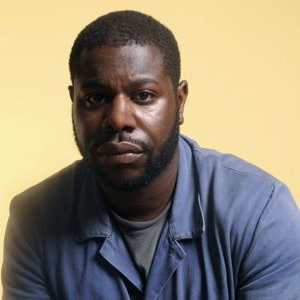
1. Steve McQueen (Hunger, Shame, Twelve Years A Slave)


Steve McQueen began his career enjoying success as an artist, which peaked with a Turner Prize win in 1999. After creating several silent, black-and-white short films, McQueen made his feature debut with Hunger in 2008. The mostly dialogue-free film, bar a seventeen-minute single take of conversation halfway through, is an immensely powerful piece chronicling the last days of Bobby Sands. McQueen’s second feature, Shame, focussed on sex addiction and was an even more exceptional work – showcasing the director’s unparalleled ability to draw great emotion from simple imagery, as well as featuring a career-best performance from Michael Fassbender. His upcoming project, Twelve Years A Slave, is set to feature a star-studded cast and follows the story of a young man sold into slavery in 19th century New York.

Friday, 1 June 2012

Lights, Camera, Action! Action! Action!

The Raid
Dir: Gareth Huw Evans
Stars: Iko Uwais, Ray Sahetapy, Yayan Ruhian


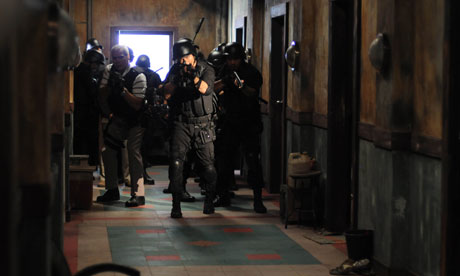
The opening of The Raid shows us a young man, Rama, praying and kissing his pregnant wife goodbye before setting off for work. Rama is one of a twenty-man SWAT police squad who are tasked with bringing down a master criminal living atop a tower block, which he has allowed to become overridden with the criminal and the destitute. From the point where the cops storm the building five minutes into the film, there is no further plot or character development – instead we are treated to an hour and a half of unrelenting action and extreme gore.

Although The Raid doesn’t pull any huge emotional punches, and is incredibly distant from its expendable characters, it is still a remarkably entertaining and action-packed film. The choreography of the fight scenes is beautifully done; with Iko Uwais and Yayan Ruhain in particular displaying admirable mastery of the Indonesian martial art Pencak Silat. Every sound, shot, wound and kick is brilliantly photographed and edited, with the action only pausing intermittently during scenes that are built on great suspense and dread. It is these moments that illustrate the impressive achievement made by director Gareth Evans, due to the success in which tension is built despite the audience’s emotional detachment to the characters on screen.

If you are looking for a balls-to-the-wall action film packed with gore, bullets and martial arts, I would heavily recommend The Raid. Considering its unknown Indonesian cast, and shoestring $1m budget, it is a much more successfully made action film than any of the Expendables cast have managed in recent years.

7/10