Monday, 31 December 2012

PurpleMonkeyBird's Top 12 Films Of 2012


12. Paranorman
A strong year for animation, 2012 saw Brave and Frankenweenie equally impressing – one because of its adventurous, pro-child, feminist storyline; and the other due to its dark outsider humour and references to classic horror movies. Yet it was Laika studio’s Paranorman that combined both of these themes sublimely and, with a cheeky helping of innuendo, managed to create an interesting, entertaining and thoroughly thought-provoking family film.

11. Argo
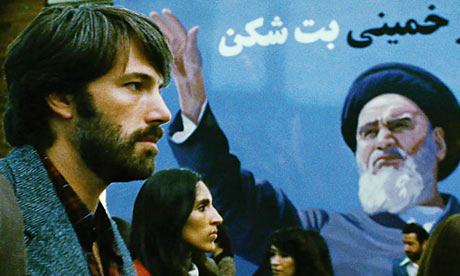
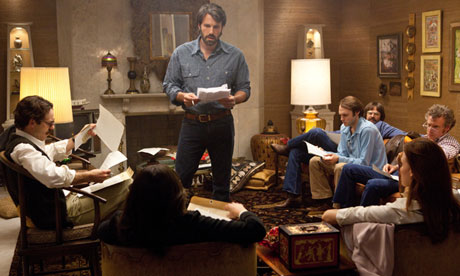
It is testament to Ben Affleck’s ability as a director that a little known, and somewhat predictable, story can be brought to the big screen with such prowess. Argo’s well-edited mixture of frustrated CIA drama, light-hearted Hollywood insider comedy, and nail-biting political thriller is absolutely seamless and also surprisingly effective.


10. The Hobbit: An Unexpected Journey
The media coverage leading up to the release of Peter Jackson’s Lord Of The Rings prequel described the movie as too ambitious, too long and too realistic. Yet The Hobbit ultimately proved to be a magical, exciting and overdue return to Middle Earth that successfully serves as a lighter and cosier companion piece to Jackson’s seminal fantasy trilogy. George Lucas and Ridley Scott should take note.


9. The Dark Knight Rises
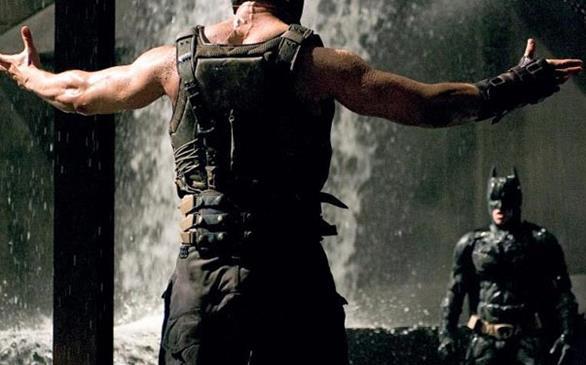
After the success of The Dark Knight, Christopher Nolan may have been genuinely afraid of creating a trilogy so well liked that it would be impossible to complete. The Dark Knight Rises therefore let fans breath a huge sigh of relief - despite having plot holes large enough to drag a nuclear bomb through. Hans Zimmer’s score, Wally Pfister’s cinematography, and Tom Hardy, Anne Hathaway and Joseph Gordon-Levitt’s performances allowed Batman to gracefully bow out knowing that Gotham will never again have it so good.


8. The Master
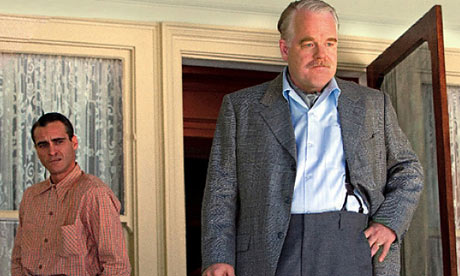
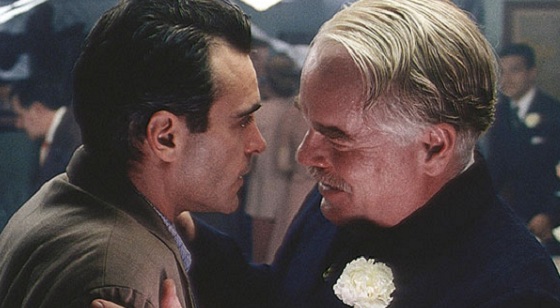
Although its thin plot is spread over an excessive 140-minute running time; the substance of Paul Thomas Anderson’s The Master more than makes up for what it lacks in story. Joaquin Phoenix and Philip Seymour Hoffman’s central performances create one of the greatest relationships ever committed to film, and the subtle beauty of the direction re-enforces Paul Thomas Anderson’s reputation as a master of cinema.


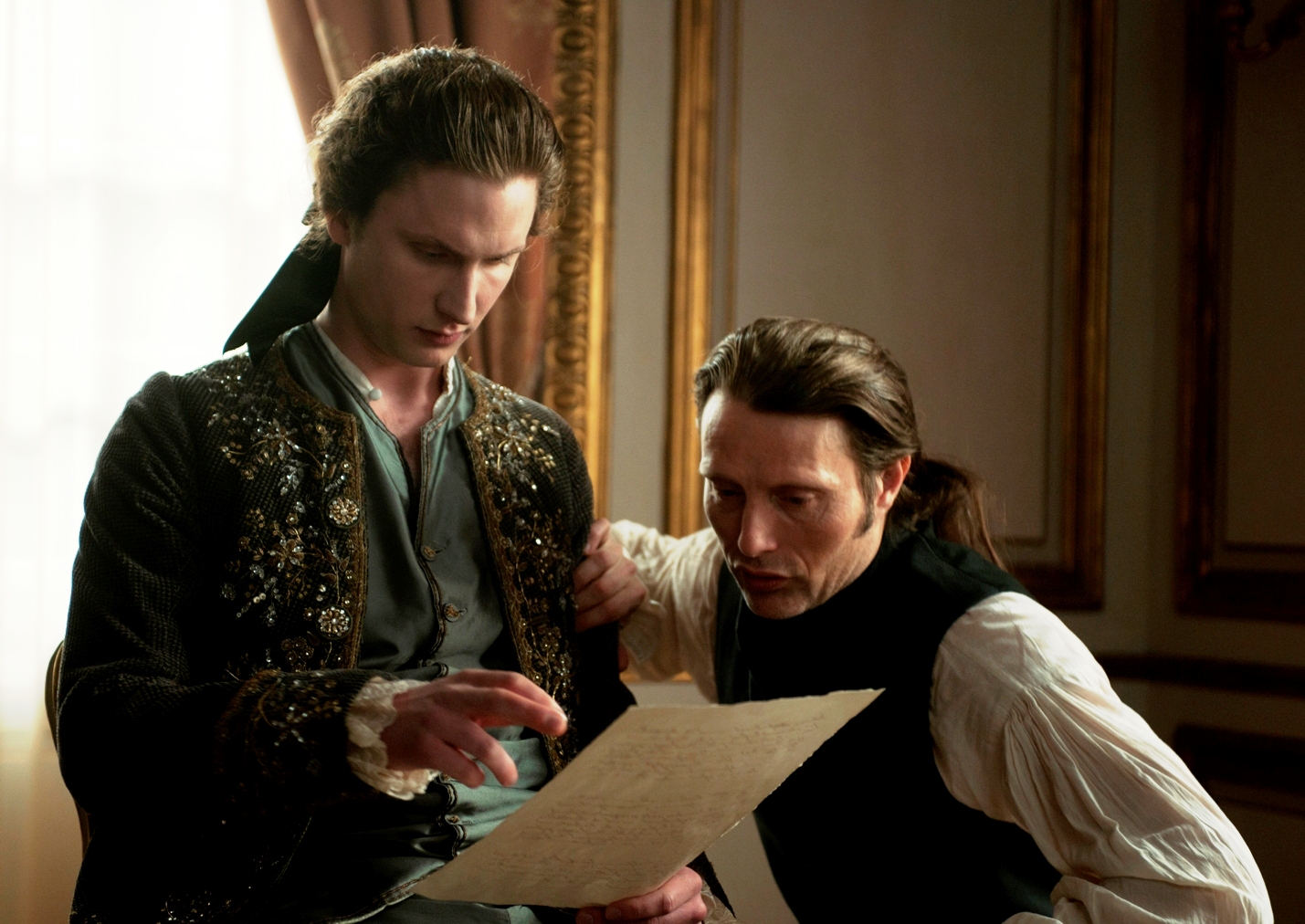
7. A Royal Affair
Is there any way of making a historical drama about the Danish royal family of the eighteenth century sound interesting? Though severely under-watched in 2012, A Royal Affair is so much more than costumes and haircuts. This well-acted film addresses the struggles of the enlightenment against religion, proletariat against bourgeoisie, liberty against security and ultimately explores how power can corrupt those with even the most principled intentions.


6. The Cabin In The Woods
Whilst Joss Whedon broke box-office records this year with international hit The Avengers, his screenplay for The Cabin In The Woods is a much more original, unpredictable and over-the-top cult comedy. Loaded with self-conscious horror tropes, there are loads of laughs to be had from the shameful exploitation of gore, shock, sex and violence; as well as the ongoing meta-joke that the audience are pulling the strings of the action and baying for teenage blood. A hilarious and entertaining ride.


5. Untouchable

Not unlike last year’s The Artist, France has again provided us with the year’s most charming and uplifting feel-good movie. Never overly exploiting the emotional strings that could so readily be pulled, Untouchable is witty, uncondescending, and funny throughout. Omar Sy’s likeable and charismatic performance alone will allow you to ignore any reservations you may have towards the schmaltzy premise, and enjoy the film for what it is – an absolute treat.


4. Searching For Sugar Man
Apartheid South Africa was so isolated from the seventies that music fans believed the American anti-establishment artist ‘Rodriguez’ was bigger than Elvis Presley. Upon realising that his fame is not universal, musicologists search through clues in his lyrics to discover the story of the man who inspired their generation. Rumoured to have died poor and unappreciated, after burning himself alive on stage, the search for 'Sugar Man' is an amazing exploration into how great art lives forever in the hearts of those it reaches.


3. Sightseers
Not since Edgar Wright’s Hot Fuzz has a film so amusingly captured the dark irony present in how psychopathically defensive the quaint Little English can become when they perceive their world to be under threat. Ben Wheatley was undoubtedly the perfect choice to direct this wonderfully witty script, which manages to terrifically balance both shock and humour. Steve Oram and Alice Lowe’s hilariously judged performances as a couple of psychopathic caravaners helped make Sightseers the funniest film of the year.


2. iLL Manors
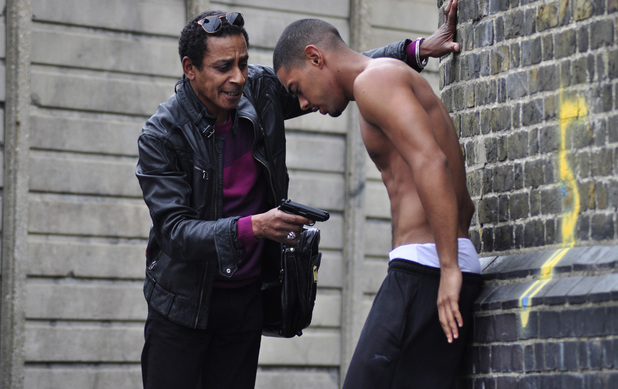
Shot for a paltry £100,000 and featuring a cast of largely untrained actors, Ben Drew’s debut film iLL Manors could have easily been disregarded as a low budget vanity project. Instead, Drew has created an inescapably dark, yet strikingly relevant, exploitation film similar to 2009’s Harry Brown. Its broad range of cinematic references draw from the likes of Pulp Fiction and Taxi Driver, but also Superfly and Eastenders. A film that is simultaneously involving and alienating, iLL Manors is an exciting debut from a rising British talent, and boasts a soundtrack that matches the action in a way that no film has since the golden age of blaxploitation.


1. The Imposter

Another debut film from a British director, The Imposter’s unbelievable premise, gripping plot and spectacular cinematography leave you having to remind yourself that you are watching a documentary, and not a sophisticated crime thriller. Bart Layton’s fascinating film explores deceit, suspicion, loss, and the desire to be loved. Yet, within its thick web of lies and questions, the notion of truth is constantly fleeting; and as the story unravels it becomes increasingly difficult to trust what is being presented on screen. The Imposter is an intriguing and exciting piece that really must be seen to be believed.

Friday, 28 December 2012

Entertainment Not Guaranteed

Safety Not Guaranteed
Dir: Colin Trevorrow
Stars: Aubrey Plaza, Mark Duplass, Jake Johnson


Safety Not Guaranteed is a low-budget feature from debut director Colin Trevorrow, which derives its title and central premise from a 1997 classified advertisement posted by a supposedly experienced time traveller in search of an assistant. The original ad was actually written last minute by a newspaper employee, and recently found a second life as an internet meme; yet Trevorrow’s film instead tells the fictitious story of a pig-headed journalist and two socially awkward interns who set out to track down the eccentric who posted the advert and exploit his probable incompetence for the sake of a light-hearted magazine story.

Safety Not Guaranteed is about as good as you’d expect a film based on a meme to be. There are frequent early references to Facebook and Craigslist to remind the intended demographic that what they’re watching is set in the 21st century, despite most of the action taking place in a forest or a suburban home. The movie is more a romantic comedy than a sci-fi piece, yet it still must understandably exist in a world in which time travel is possible; although it's also apparently the case that in this world every female character is regarded as considerably more ugly than she appears, whilst the men are all supposed to be much more attractive - despite being utter tools. Casual sexism aside, the characters are still a pretty hollow bunch whose intentions and emotions rarely manage to engage the audience enough to care, and are instead either just affectedly ‘kooky’ stock characters or lazily written stereotypes.

Rather than injecting the oddball humour into the amateur master/desperate apprentice relationship that is present in films such as Super and God Bless America, Safety Not Guaranteed is a much more slower and forgettable adventure that is just about interesting enough to hold your attention for an hour and a half, but is ultimately predictable and unrewarding. It goes to show that a mildly amusing 36-word meme may not be the strongest basis of a screenplay, especially if you completely ignore the “I have only done this once before” part. Maybe Trevorrow’s next adaptation, "Condescending Wonka and the Chocolate Factory", will bring him more luck.

6 / 10

Saturday, 17 November 2012

There Will Be Dianetics

The Master
Dir: Paul Thomas Anderson
Stars: Joaquin Phoenix, Philip Seymour Hoffman, Amy Adams


Since the final line was bellowed at the close of There Will Be Blood, Paul Thomas Anderson’s next feature film has been eagerly awaited. Expectations of The Master were always going to be pretty high; especially considering the plaudits it has received from critics due to its honest fixation on Hollywood’s ever-expanding elephant in the room. Whilst the similarities between Philip Seymour Hoffman’s Lancaster Dodd and L. Ron Hubbard are bravely apparent, the questioning of Scientology's credibility is not what is most intriguing about The Master.

Joaquin Phoenix portrays Freddie Quell, a Naval veteran who has returned from the Second World War as a broken, jaded, volatile and unloved alcoholic. Drifting through post-war life on a knife-edge, Freddie encounters the benevolent and beguiling members of ‘The Cause’, who seek to heal him of his inner suffering by applying their Master’s evolving theoretical philosophy. Although Freddie’s aggressive spontaneity seems at ends with Lancaster Dodd’s idealistic charisma, the two offer each other a uniquely honest and devoted relationship as they struggle together through the public animosity they face as a result of their separate manias.

The performances from the two leads are absolutely exceptional, and make it incredibly difficult not to become immersed in the drama. Joaquin Phoenix’s high waist, low shoulders and mumbling jaw create a character who is so dangerously lost, but also so unashamedly uninhibited, that it is impossible for an audience not to become transfixed by him. Meanwhile, Philip Seymour Hoffman’s wistful and whimsical portrayal of Lancaster Dodd oozes of the authority and self-importance apparent in any man who allows himself to become deluded by his own charisma. The Master also greatly benefits from the subtly artistic directorial style of Paul Thomas Anderson, and a brilliantly simple score by Radiohead’s Jonny Greenwood, which makes the entire piece enjoyable and engaging.

The only real problem with The Master is its two and half hour running time which, not unlike the work of Lancaster Dodd, can leave you feeling that the great writer may just be pushing his luck a little too hard and making it up as he goes along. Although Anderson is notoriously reluctant to drop below the 140-minute mark, The Master lacks the broad ensemble cast and dynamic set pieces that his previous efforts utilised in order to hold the audiences’ attention. A tighter edit, therefore, may well have benefited the story and given the most exceptional scenes a little more salience.

Although it may lose focus at times, the overall success of The Master lies in its intriguing and intoxicating exploration of a psychologically broken animalist, who’s only attempt at meaning lies in an individual claiming to be greater than mortal.

8 / 10

Sunday, 4 November 2012

Tainted Love

Sightseers
Dir: Ben Wheatley
Stars: Steve Oram, Alice Lowe, 'Smurf' The Dog


After directing the unforgettably dark and suffocating Kill List, you can’t blame Ben Wheatley for wanting to return to his comedy roots. His latest feature, Sightseers, manages to maintain all the trademark brutality and amorality of its predecessor - with Steve Oram and Alice Lowe’s witty script and impeccably developed characters providing great company for 90 minutes of shocked gasps, hearty laughs and guilty chuckles.

Sightseers introduces us to a thirty-something Brummie couple who are set to begin their relationship with a caravan holiday around the British countryside. Enthusiastic Chris (Oram) wants to show naïve Tina (Lowe) the luscious country he adores; yet as they progress on their tour of Little England’s quirkiest sightseeing spots (Crich Tramway Museum, Muncaster Owl Centre, Keswick Pencil Museum) the frustration of keeping their relationship exciting, whilst having to suffer their annoying fellow campers, leads Chris and Tina on a macabre journey of nihilistic violence and murder.

A product of the writers’ seven-year comedy tour, Chris and Tina are an original and enjoyable pair of oddball characters, with every one of their utterances and interactions guaranteed to ease a smile on the faces of the audience. One a dedicated lover, and respecter, of what he sees as the majestic English countryside, the other a shy and awkward dog psychologist – the pair are so pathetically out of touch with reality that they are destined to be together. Yet when they face the inevitable challenges presented by their burgeoning relationship, the romance gradually descends into psychopathic violence. It is here that the laughs get darker, but louder, as the repressed couple’s caravaning romp across a country full of obnoxious litterers, middle-class boasters and yuppie ramblers leads them down a path of homicide and arson.

Not since executive producer Edgar Wright’s Hot Fuzz has a film so amusingly captured the dark irony present in how the Little English view their world. Ben Wheatley was undoubtedly the perfect choice to direct this wonderfully witty script, and manages to terrifically balance both shock and humour. With the nights drawing in, and the cold and wet winter upon us, Sightseers is a delightfully dark comedy that will warm audiences with its many, many laughs.

9 / 10 

Wednesday, 31 October 2012

The Iranian Job

Argo
Dir: Ben Affleck
Stars: Ben Affleck, Bryan Cranston, John Goodman


After the critical success of Gone Baby Gone and The Town, Ben Affleck’s latest offering, Argo, seems set to shed any previous associations as the lead of popcorn flops, and instead establish his reputation as an exciting young actor-director. Argo sees Affleck trade his comfort zone of Boston for revolutionary Iran. After a brief, and bravely honest, prologue outlining the CIA’s involvement in the Middle East leading up to the 1979 Islamic revolution; we are taken to the American embassy under siege by angry protesters who take scores of ambassadors hostage in order to negotiate the extradition of the Shah of Persia from The United States. However, six Americans lay in hiding after managing to escape the embassy, and the CIA must use the most unlikely means to bring them home safely before they are captured, tortured and killed.

Partly a political thriller, and partly a tribute to the close of ‘the decade under the influence’, Affleck’s third feature manages to perfectly juggle scenes of tense CIA agents desperately working with few options and against the clock; American ambassadors attempting to survive amidst the confusion and contempt of the Islamic revolution; and embittered Hollywood bigwigs joking their way through the movie production process. With references to films as diverse as Battle For The Planet Of The Apes all the way down to SSSSnake!, Affleck perfectly captures the cinematic landscape of the time, and allows John Goodman and Alan Arkin the freedom to provide much of the comic relief.

However, the darker side of the plot is also incredibly well directed with stunning precision and historical accuracy (as a post-credits sequence of photographs further highlights). It is testament to Affleck’s ability as a director that a little known, and somewhat predictable, story can be brought to the big screen with such prowess. The unforgettably tense dénouement sees the three separate story arcs and settings dramatically colliding together, and will have every member of the audience on the edge of their seat. Although the final five minutes or so could ultimately be done without, the performers on screen are always a pleasure to be around, and could see themselves in line for accolades come awards season.

8 / 10

Thursday, 18 October 2012

Top 5 Found Footage Films

After last night's release of Paranormal Activity 4, PurpleMonkeyBird takes a look at some of the greatest films within a much-maligned subgenre.

5 Troll Hunter (Trolljegeren)


A group of students set out to make a film about mysterious bear deaths in the Norwegian woods, and instead discover that government-appointed Troll Hunter’s have been working for years to fight dangerous mythical beasts. Irreverent and knowing fun, with surprisingly convincing special effects.

4 The Blair Witch Project


The genuine frustration and terror experienced by a group of teenagers shooting a paranormal documentary whilst lost in the woods, coupled with a perfect PR campaign, led Blair Witch to break box office records upon its release. A simplistic, yet chilling, teenage rite of passage.

3 [REC]


A documentary on firefighters suddenly becomes a pulsating fight for survival after a seemingly viral outbreak in a tower block. Ending and sequels aside, [REC] is an incredibly immersive and exciting zombie horror, which excites, terrifies and outrages in equal measure.

2 Cannibal Holocaust


The original ‘found footage’ movie was banned in the UK for unforgivable scenes of animal cruelty; and led to the arrest of director Ruggero Deodato in his native Italy due to the film’s vérité ultraviolence leaving many to believe they had watched a genuine snuff film. Not for the faint hearted, Cannibal Holocaust’s commentary on the amorality of the sensationalist news media makes it as relevant today as it is shocking.

1 Man Bites Dog (C'est Arrivé Près De Chez Vous)


Similar to Cannibal Holocaust, Man Bites Dog illustrates the possible depths to which the gutter press will stoop for a scoop. As a film crew shoot a documentary about a psychopathic killer, they are gradually dragged into his world of nihilistic violence, mania and contempt for human life. A challengingly dark, yet charismatic, central performance from Rémy Belvaux makes for an uncomfortable and interesting cult thriller.

Thursday, 27 September 2012

...Rich Man, Poor Man, Beggar Man, Thief

Killing Them Softly
Dir: Andrew Dominik
Stars: Brad Pitt, Ray Liotta, James Gandolfini


The latest film from Andrew Dominik (Chopper, The Assassination of Jesse James…) is quite a difficult one to pin down. Set against the backdrop of the 2008 US Presidential Election and the beginning of the global financial crisis, Killing Them Softly follows the interlocking activities of a few downbeat criminals - some young and stupid, others old and hardened - as they attempt to salvage a form of living beneath the radar, whilst the government is focussed on bailing out the corporate world slowly falling around them.

The film was interesting in that following the story was not entirely necessary to enjoying the action. The gorgeous cinematography and stellar performances meant the real beauty of the picture lay in its nuances. The look of distain in the eyes of a weather-beaten criminal, the way in which light plays off the window of a diner, or the imaginative visual dissection of an act of killing can all lead you to being distracted from what is actually being said by the characters on screen; and instead lead you to becoming lost in the picture’s subtle beauty along the way.

That is not to say that acting is forgettable. Whilst there is no real central character in Killing Them Softly, there is instead an ensemble of actors who have plied their trade portraying members of society’s darker echelons. There is also a very, very deep pit of dark humour to be found in a script that exudes an air of tired masculinity - lines like “You’re telling me to stop drinking? I was drinking before you came out of your fathers cock!” punctuate the exchanges between tired criminals attempting to control their own private economy as the greed and recklessness of a few have sent it spiralling into chaos.

Killing Them Softly is a crime drama with inspired pockets of aestheticised violence, yet it doesn’t have the broad, overlapping themes of Lawless or the punchy neo-noir feel of Drive. Instead, it is a slow, macabre tale of grizzly masculinity struggling to maintain a grasp on power in the wake of double-crossing and distrust in dingy, smoke-filled rooms - and will therefore greatly engage those who enjoyed Tinker, Tailor, Soldier, Spy. Jackie Cogan’s final ruminations on the selfish, aggressive and business-like nature of modern America, contrasted with Obama’s ideal of a truly United states, offers a perfect ending to brilliantly subtly and nihilistic film.

8 / 10

Frighteningly Thought-Provoking Family Fun

Paranorman
Dirs: Chris Butler & Sam Fell
Stars: Kodi Smitt-McPhee, Tucker Albrizzi, Christopher Mintz-Plasse


Paranorman tells the story of a young horror film fan who is surrounded by the ghosts of previous residents of his small American town. Ostracised at school for being “ab-Norman”, he befriends fellow outsider, Neil, and together they must prevent the supernatural catastrophe that will occur at his witch-hunting community’s fast approaching anniversary.

During Paranorman’s first act you find yourself ignoring that the major plot strand seems to be following in the footsteps of established popcorn favourites like The Sixth Sense or Troll 2. This is because the brilliance of the film’s opening lies in the little gags and horror movie references that cover Norman’s day-to-day life; and the enjoyable character development that wonderfully illustrates the rôle of movies in an outsider’s childhood, akin to last year’s Super 8. The plot then takes a rather mature and unexpected turn, and after an adventure full of genuine laughs and frights, the final scenes of Paranorman leave the audience with much food for thought.

The film is also a great technical achievement for Laika studios, the creators of Coraline. In an industry that has become overloaded by movies more concerned with merchandising profits than entertainment, cinematographer Tristian Oliver (Wallace & Gromit, Chicken Run, Fantastic Mr. Fox) has managed to create a visually extraordinary world for Norman to inhabit, as well as terrifically convincing special effects and characterisation through the strenuous and mind-bogglingly patient art of stop-motion animation. Moreover, a supporting cast including Anna Kendrick, Casey Affleck, Jeff Garlin and John Goodman help to bring the population of Norman’s town to life with great warmth and vigour.

Paranorman is definitely not a children’s film, it contains genuinely spooky scenes that go far beyond “mild peril” and its references, innuendo and thought-provoking themes make it almost more enjoyable for adults. This family stop-motion horror film deeply challenges the small town mentality of immediately confronting what is unknown with bigotry, hatred and fear – and instead advises children and adults alike to take the time to listen to those who are ignored and embrace their individuality.

8 / 10

Sunday, 9 September 2012

True Bromance

Untouchable (Intouchables)
Dir: Olivier Nakache and Eric Toledano
Stars: Omar Sy, François Cluzet, Anne Le Ny


After becoming the second most successful French film of all time within the first nine weeks of its domestic run, dividing audiences and critics along the way, I was desperate to see the first and only screening of Untouchable in Manchester this week – at the city’s crappest multiplex. The schmaltzy publicity surrounding the movie set my expectations as low as the quality of the cinema’s seats, but I was pleasantly surprised by Untouchable’s charismatic performances and thoroughly unpretentious charm.

The story follows the development of a friendship between two men: Phillipe, an aristocratic quadriplegic with a diminished appetite for life; and Driss, a young man with buckets of charisma and low ambitions. After Phillipe’s interview process for a new carer only attracts pitying and money-orientated applicants, he is immediately attracted to Driss - whose frankness and lack of judgement seals him the job. We then follow the friendship that develops between the two. One rich, white, “cultured” and with a dying libido; the other poor, black, young and audacious.

Although the premise sounds unoriginal, and may remind you of predictable Hollywood fare such as The Bucket List and The Blind Side, the movie itself is an absolute joy. Never overly exploiting the emotional strings that could readily be pulled, it is a witty and uncondescending comedy drama that had the audience smiling the whole way through. Omar Sy’s performance in particular exhibits the same clinical comic timing and infectious charisma that has served Roberto Benigni and Jean Dujardin so well with English-speaking audiences in recent years. The superb editing and diverse soundtrack also prevent the film from ever being a labour to watch – and allow it to switch between heartwarming and heartbreaking with terrific subtlety.

Not unlike last year’s The Artist, it seems that again France may provide us with the year’s most charming, uplifting and feel-good movie. Untouchable will undoubtedly annoy some due to its seemingly clichéd premise and flawed publicity campaign, but don’t let this misrepresentation deter you. Leave cynicism behind, and enjoy the film for what it is – an absolute treat.

9 / 10

Thursday, 6 September 2012

The Assassination Of A Bootlegging Gangster Movie By The Misguided Guy Pearce

Lawless
Dir: John Hillcoat
Stars: Shia LeBeouf, Tom Hardy, Jessica Chastain


Lawless is a rough crime drama set in Virginia during The Great Depression. It follows the true story of the three Bondurant brothers who made their fortune producing and selling moonshine, despite fierce opposition from their competitors and the law. Of course the rise of the gangster is never smooth; and the Bondurants business is constantly muddied by intimidation, violence, vengeance and pain.

The power of Lawless lies mainly in its cast. Tom Hardy grunts and lurches his way through the film as the indomitable Forrest, a mountain of masculinity that Hardy oddly described as playing with the demeanour of “an old lesbian” yet the subtle authority of “the grandmother from Sylvester and Tweety”. Shia LeBeouf delivers a career-best performance as the young Jack Bondurant, whose involvement in a variety of subplots allows him to display more versatility than would be possible in a lifetime of Transformers movies. Jessica Chastain also proves the old edict that “there are no small parts, only small actors” and despite her limited screen time, steals nearly every scene that she’s in with her strength and subtlety.

However, there is a single performance in the film which is not only unconvincing from an actor who we have seen do better, but also exemplifies Lawless’ weaknesses in general. Guy Pearce plays Charlie Rakes, an intimidating Chicago police officer who is looking to shake down the Bondurants by any means possible. Pearce insisted on designing a character with a ‘distinctive’ look (which is as off-putting as his rôle in Prometheus); and his performance is incredibly misguided. In amongst the dustbowl subtlety of the rest of the ensemble, Pearce acts more like a cross between Hans Landa and Goldfinger – a maniacal caricature of a villain whose recklessness leaves you wondering how he climbed to such a high position in the police without being sectioned.

Pearce’s outlandish performance brings down most of the scenes he’s in, puncturing the drama of the true story and diluting the audience’s suspension of disbelief. Whilst there are many strong performances in the film, they are sometimes hampered by Nick Cave's flawed script that only really gives Shia LeBeouf’s character room to develop; resulting in Gary Oldman and Mia Wasikowksa only appearing on screen for a few minutes.

Lawless is bloody and brooding, and features some great acting performances. However, Guy Pearce’s problematic characterisation and a script lacking in direction may leave it dry as a dustbowl come awards season.

7 / 10

Friday, 24 August 2012

Faking It

The Imposter
Dir: Bart Layton


Occasionally, a film comes along that I strongly recommend others to see, but with the caveat that they don’t attempt to read anything about the film’s plot beforehand. Recent examples have included Capturing The Freidmans, the exquisitely disturbing documentary uncovering a suburban sex scandal; and Catfish, the Facebook generation’s twisted road trip with a difference. The Imposter should certainly be seen as another of these movies. Its unbelievable premise, gripping plot and spectacular thematic exploration leave you having to remind yourself that you are watching a documentary, and not a sophisticated crime thriller. 

The Imposter focuses on the story of Frédéric Bourdin, a dark 23-year-old Frenchman who, in 1997, successfully convinced a Texan family that he was their missing blonde, blue-eyed, 16-year-old son. Through interviews with Frédéric and the boy’s family, as well as dramatic reconstructions, The Imposter explores a truly fascinating story of deceit, suspicion, loss, and the desire to be loved. 

It is not just the events in the film that are so compelling, but also the prowess with which debutant director Bart Layton and cinematographers Lynda Hall (Dreams Of A Life) and Erik Wilson (Submarine, Tyrannosaur) capture the emotion of those involved, and spectacularly recreate the gaps in the subjects’ stories. The dark visuals, smooth match cuts and aching soundscapes make it impossible not to invest and empathise with the people on screen. Yet, within this web of lies and questions, the notion of truth is constantly fleeting, and as the story unravels it becomes increasingly difficult to trust and believe what is presented on screen. 

Regardless of how you feel leaving the cinema, The Imposter is an incredibly well executed film, which is guaranteed to engage every member of the audience before leaving them desperate to discuss and discover more.

10/10

Wednesday, 1 August 2012

Bear Jokes

Ted
Dir: Seth MacFarlane
Stars: Mark Wahlberg, Seth MacFarlane, Mila Kunis


Ted begins in Boston in 1985, where a young boy’s Christmas wish comes true and his toy teddy bear is magically brought to life. Ted (voiced and performed through motion capture by Family Guy creator Seth MacFarlane) enjoys a brief career as an 80s child star, before we jump to the present day where he now exists as a layabout stoner buddy, and general bad influence, to his 35 year old childhood friend, John (Mark Wahlberg). As the film progresses, Ted and John’s immature friendship based around getting high and watching Flash Gordon begins to take a strain on John’s relationship with his more mature girlfriend, Lori (Mila Kunis).

For a film about an anthropomorphised, pot-smoking, foul-mouthed and casually racist teddy bear – Ted begins very strongly. There’s loads of laughs to be had just watching Ted and John chilling on the couch and making pop-culture jokes, which are reminiscent of Family Guy’s glory days. There are also great comedic performances from the supporting cast, including a handful of amusing cameos. The first hour of Ted is well paced and had me regularly laughing out loud.

However, MacFarlene then seemed to remember he was writing a Hollywood movie and not an anarchic 20-minute TV episode. Staple story conventions thus creep in, channelling the likes of Knocked Up and Toy Story 2. The final act of the film, therefore, steers towards a predictable ending with significantly less laughs. Yet, annoyingly, the story didn’t need to be so telegraphed. More of the early vulgar humour would have been strong enough to entertain the movie’s key demographic, and some of the finest comedies – such as This Is Spinal Tap – manage to keep up the laughs when characters hit similar problems to MacFarlane’s.

The majority of Ted is crude, close to the mark and very very funny. Unfortunately, the schmaltzy and predictable story telling towards the end let down what could have been a much more entertaining film. Hopefully MacFarlane’s next picture will stick to pleasing the immature stoners, rather than attempting to grow up.

7 / 10

Sunday, 29 July 2012

(196) Days Of Movies

With Avengers, Prometheus, The Amazing Spiderman and The Dark Knight Rises behind us – a contentious summer blockbuster season has drawn to a close, amongst cheers of excitement and groans of over-hype. So what’s the next big movie to look forward to? And what will flop like a decapitated android? Here’s a quick run down of 20 of the biggest features hitting our screens in the next six months. 

AUGUST

The Bourne Legacy
Dir: Tony Gilroy. Stars: Jeremy Renner, Edward Norton, Rachel Weisz.
Bourne, but without Bourne. Legacy instead follows the parallel storyline of assassin Aaron Cross, and his battle against the system that created him.

Brave

Dir: Mark Andrews & Brenda Chapman. Stars (voices): Kelly Macdonald, Billy Connolly, Emma Thompson, Julie Walters, Robbie Coltrane.  
This original Disney/Pixar story follows a strong Celtic Princess who must rely on her bravery and archery skills in order to undo a mythical curse.

The Expendables 2
Dir: Simon West. Stars: Sylvester Stallone, Jason Statham, Bruce Willis, Liam Hemsworth, Arnold Schwarzenegger, Jean-Claude Van Damme, Jet Li, Chuck Norris, Dolph Lundgren, Terry Crews.
The plot is superfluous. All of the people above are in it. Plus guns and explosions.

The Watch
Dir: Akiva Schaffer. Stars: Ben Stiller, Jonah Hill, Vince Vaughn, Richard Ayoade
Co-written by Seth Rogen, this sci-fi comedy follows a neighbourhood watch group who must defend their sleepy suburb from alien invasion.

SEPTEMBER

Lawless
Dir: John Hillcoat. Stars: Tom Hardy, Gary Oldman, Guy Pearce, Shia LaBeouf, Jessica Chastain 
A bootlegging gang of brothers in depression-era Virginia are threatened by a corrupt Sheriff who is after a cut of their profits. 

Dredd 3D
Dir: Pete Travis. Stars: Karl Urban, Olivia Thrilby, Lena Headey 
Remake of Stallone’s 1995 action thriller flop set in a dystopian future in which urban cops are given the powers of judge, jury and executioner. 

OCTOBER

Taken 2
Dir: Olivier Megaton. Stars: Liam Neeson, Maggie Grace, Famke Janssen
In Taken, criminals abduct Liam Neeson’s daughter, so he efficiently and mercilessly kills them all. This time, the criminals have taken his wife. Clever.

On The Road
Dir: Walter Salles. Stars: Garrett Hedlund, Sam Riley, Kristen Stewart, Viggo Mortensen, Amy Adams, Kirsten Dunst, Steve Buschemi
Big-screen adaptation of Jack Kerouac’s autobiographical epic, exploring Beat culture in post-war America. 

Skyfall 
Dir: Sam Mendes. Stars: Daniel Craig, Ralph Fiennes, Judi Dench, Javier Bardem, Ben Whishaw 
James Bond must hunt down and eliminate a threat facing MI6, no matter how personal the cost. Also, Q’s back. So expect plenty of gadgets and product placement. 

Frankenweenie
Dir: Tim Burton. Stars: Martin Landau, Martin Short, Winona Ryder, Christopher Lee
Tim Burton returns to his stop-motion roots with a film that doesn’t feature Johnny Depp or Helena Bonham Carter. Could this be a return to form?

NOVEMBER

The Master 
Dir: Paul Thomas Anderson. Stars: Joaquin Phoenix, Philip Seymour Hoffman, Amy Adams
The brooding trailers don’t give much away. Anderson’s latest offering follows an intellectual whose faith-based organization begins to catch on in America. 

Rise Of The Guardians
Dir: Peter Ramsey. Stars (voices): Hugh Jackman, Alec Baldwin, Isla Fisher, Jude Law, Chris Pine

Santa, The Easter Bunny, The Tooth Fairy, Jack Frost and The Sandman unite to take on The Boogeyman. Conceptually confusing fare for gullible kids. 

DECEMBER

The Hobbit: An Unexpected Journey 
Dir: Peter Jackson. Stars: Martin Freeman, Sir Ian McKellen, Elijah Wood, Andy Serkis, Cate Blanchett, Hugo Weaving, Christopher Lee, Evangeline Lily, Orlando Bloom, Billy Connolly, Bret McKenzie
From the director of The Lord Of The Rings, comes the first in a trilogy of films following Bilbo’s early adventures with the Dwarves seeking Smaug The Dragon’s stolen treasure.

The Great Gatsby
Dir: Baz Luhrmann. Stars: Leonardo DiCaprio, Cary Mulligan, Tobey Maguire, Isla Fisher, Joel Edgerton, Amitabh Bachchan
Stylised retelling of Fitzgerald’s classic novel. Set for a wide 3D release - and featuring the God of Bollywood - this is set to make a lot, internationally.

JANUARY

Gangster Squad
Dir: Ruben Fleischer. Stars: Ryan Gosling, Emma Stone, Sean Penn, Giovanni Ribisi, Josh Brolin, Nick Nolte
A neo-noir chronicling of the LAPD's fight to keep the East Coast Mafia out of Los Angeles in the 1940s and 50s.

Les Misérables
Dir: Tom Hooper. Stars: Hugh Jackman, Russell Crowe, Anne Hathaway, Amanda Seyfried, Helena Bonham Carter, Sacha Baron Cohen
Film adaptation of the hugely successful stage musical in which paroled prisoner Jean Valjean seeks redemption during the French Revolution.

Django Unchained 
Dir: Quentin Tarantino. Stars: Jamie Foxx, Christoph Waltz, Leonardo DiCaprio, Samuel L Jackson, Don Johnson, Kerry Washington, M.C. Gainey, Zoe Bell
Freed slave, Django, becomes deputy to a bounty hunter and sets out on a journey through the Deep South, seeking revenge against a cruel plantation owner.

Lincoln
Dir: Steven Spielberg. Stars: Daniel Day-Lewis, Joseph Gordon-Levitt, Tommy Lee Jones, Sally Field, Jared Harris
Steven Spielberg’s biopic follows Daniel Day-Lewis’ Abraham Lincoln as he leads the North to victory in the American Civil War.

FEBRUARY

Hitchcock 
Dir: Sacha Gervasi. Stars: Anthony Hopkins, Scarlett Johansson, Jessica Biel, Helen Mirren, Toni Collette
Adaptation of Alfred Hitchcock And The Making Of Psycho. An exploration of the effect Psycho had on its filmmaker, its cast, and the cinematic landscape.

A Good Day To Die Hard
Dir: John Moore. Stars: Bruce Willis, Jai Courtney, Sebastian Koch, Patrick Stewart (rumoured)
John McClane returns in the fifth Die Hard movie. This time with his son, though probably still without promotion, he fights evil forces in Russia.


Saturday, 28 July 2012

It's Only A Movie


In the wake of the Aurora shootings, the more conservative and religious elements of the American press immediately turned on cinema as the motivation for a motiveless and abhorrent catastrophe. James Holmes' sadistic killing and wounding of tens of innocent audience members has raised the question that seems to be appear once in a generation – does watching violent films result in violent behaviour?

To believe such a proposition to be true is incredibly insulting to the audience and to film-makers. Anyone who holds such a view is at best ignorant and at worst suggestible to the point of lunacy. I have watched a lot of movies. I therefore have also watched a lot of movies containing scenes of brutality, abuse and sexual violence. However, I have at no point during watching such scenes considered replicating what I see on screen in real life. This is probably because I, like every other sane member of a cinema audience, can distinguish reality from fiction. The argument that cinema causes violence cannot really hold any weight until a mentally and emotionally stable person, with a happy upbringing and social life, suddenly watches a movie and is then transformed into a murdering psychopath. I have yet to hear of such an occurrence, but feel that if a person could do something as atrocious as what happened in Aurora, watching violent movies was probably the least of their problems.

The American Right’s necessity for a quick fix answer to a complex tragedy also seems to be incredibly biased. Films are blamed for violence despite passing through test screenings and national film certification committees in order to ensure that the filmmakers’ message successfully reaches an appropriate audience, in context. Yet no one tests real life on an audience to check they understand it properly. Real life isn’t given age-appropriate rating. Any kids film released in a given week won’t include murder, rape, war, abuse or abduction – but you can guarantee in that week the news will. The difference is that you don’t get to leave reality with your kids when the lights go up and discuss how the villain’s voice sounded. The safety of context and fiction is gone. Yet films are still targeted before the news media as the cause of violence.

The Legion of Decency, a US Catholic organisation, were so sure of the effect films had on immoral behaviour that they created their own film rating system - this including the ‘O’ rating (morally offensive) and the ‘C’ rating (condemned). If a film was given the ‘C’ rating by the Legion of Decency, Catholics were banned from seeing it. Some examples of ‘C’s include Some Like It Hot, Psycho, Spartacus, The Good, The Bad and The Ugly, The Rocky Horror Picture Show and Taxi Driver. Whilst Catholics of all ages were banned from seeing these movies, they are still encouraged from childhood to read The Bible. The Bible does not have an age rating, and tells its reader at several points that it is not fictional, but the God’s-honest truth. It also contains a plethora of passages explicitly encouraging genocide, public execution, homophobia, xenophobia and the subjugation of women as well as talk of demons and hellfire waiting for those that don’t comply with the will of the constantly mind-reading judge.

Why is it then that every Catholic does not literally follow the word of The Bible? You can read it at any age, and it is not presented as fiction, so why do Catholics not spend their days hunting Caananites and stoning people to death for breaking the Sabbath? It’s probably because they interpret the subject matter in context, ask questions, and draw their own conclusions about how it is applicable to their lives. It would therefore be much appreciated if the conservative and religious elements of the American press could allow movie-going audiences to do the same, and leave films alone whenever tragedy rears its ugly head. Nobody wants the horrors they may see on screen to occur in real-life; but the violence in films can provide us with an understanding of how the ugly side of life may look, yet within the safe, detached environment and the knowledge that it’s only a movie.


Thursday, 12 July 2012

Sex, Lies, And A Chicken Leg

Killer Joe
Dir: William Friedkin
Stars: Matthew McConaughey, Emile Hirsch, Juno Temple


Due to its nature, dark comedy is a subgenre that will always alienate a large percentage of the average cinema-going public. Yet William Friedkin’s latest offering, Killer Joe, dances the line between chuckles and chills with such a careless lack of aplomb that it is bound to find very few audience members who will be completely satisfied with the film by the end credits.

The film revolves around an uninhibited, vacuous and morally repugnant redneck family who seek to have one of their number killed in order to cash in on her $50,000 life insurance policy. In order to get the job done, they hire cop-come-hitman ‘Killer’ Joe Cooper to bump her off; but without the ability to pay him up front, their naive lolita daughter is accepted by Killer Joe as collateral. Jealousy is ignited, deception uncovered and brutality dispensed before a messy final sequence involving sexual humiliation, copious violence, and the gross misuse of a fried chicken leg.

Although Killer Joe features an intense, career-changing performance from Matthew McConaughey, and is in parts both gross and hilarious – by the end of the film it is difficult to totally appreciate what exactly Friedkin is trying to do. When it’s flippant and ironic, there are certainly way more laughs to be had in Killer Joe than some recent mainstream comedies like 30 Minutes Or Less. Yet when at its most sick and malevolent, the viewer is left feeling like a voyeur of the most perverted and amoral kind. This dichotomy between ironic laughs and disgusted groans comes to a head in the final scene, which fails to solidly ground the direction of the film in either camp; with the aforementioned ‘chicken leg’ sequence feeling unnecessarily repulsive.

There is a continuous theme of apathy towards televisual violence that seems to point to some kind of message – although, not unlike Haneke’s Funny Games, it is likely to be seen by most as overshadowed by the frank savagery onscreen. Killer Joe’s scrappy editing and twisted narrative result in a divisive end product, which is likely to delight some, but disgust most.

6 / 10

Tuesday, 10 July 2012

Stanley Kubrick: A Cinematic Odyssey


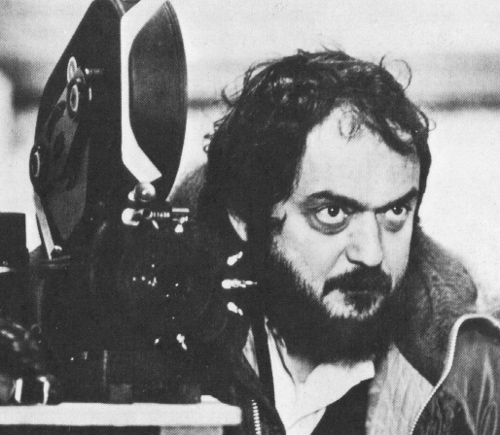
During a recent trip to Holland, I had the pleasure of attending the Stanley Kubrick Exhibition held at the EYE Film Institute in Amsterdam. The masterfully curated exhibit housed a wealth of material from the life’s work of arguably the most beguiling, ingenious and imaginative filmmaker in the history of cinema.

The exhibition began by showcasing some of Kubrick’s early photography work for Look magazine, including his first professional photograph – that of a newsvendor displaying a look of grief when selling papers reporting the death of Franklin D. Roosevelt. Several other magazine photographs of post-war America led to a small television screen showing Kubrick’s first documentary short Day Of The Fight, beside the camera with which it was shot. 


Boxing was also the focus of his 1955 film Killer’s Kiss, which was projected on the first of the many large screens throughout the exhibit, alongside The Killing. An array of paperwork, from promotional material to budget calculation sheets, offered an insight into Kubrick’s early filmmaking efforts – and his rise to prominence.

These were followed by individual projections of key scenes from each of the director’s more seminal pictures, which perfectly illustrated the scale of his illustrious career. Screenings of Paths Of Glory and Spartacus were flanked by original artwork and continuity sheets, exposing the detail with which grandiose war sequences were planned, alongside the original costumes worn by Kirk Douglas and Laurence Olivier.

Lolita and Dr. Strangleove…, began the unravelling of Kubrick’s strongest period as an auteur. Lolita was played alongside creative correspondence between Kubrick and the book’s author Vladamir Nabokov, as well as angry letters from religious groups denouncing the film. Highlights of the wealth of material surrounding Dr. Strangelove… included the original “Plan R” prop, the notepad on which Kubrick brainstormed potential titles (such as “Dr. Strangelove’s Secret Uses Of Uranus”), a scale model of The War Room, The Bomb itself, and two tickets to the cancelled premiere from the day President Kennedy was shot. There were also a set of stills from the abandoned “pie fight” ending sequence – which despite a five day shoot involving 3,000 custard pies, was dismissed by Kubrick as too farcical for satire.

2001: A Space Odyssey tends to speak for itself, though also featured one of the original ape costumes from the first monolith scene, a functional model of the rotating set used to film the zero-gravity centrifuge walk sequence, and the actual face of HAL-9000. A Clockwork Orange was my personal favourite exhibit. International artwork dedicated to the film surrounded the screen, which was buttressed by the original ivory devotchkas from the milkbar. Kubrick’s several drafts of the script stood alongside the letters of outraged cinemagoers and religious organisations (and a single hand-written letter from a fan demanding the picture feature less violence and more sex). The standout piece was the original droog costume, hat and cane infamously adoned by Malcolm McDowell.

Barry Lyndon was displayed alongside period costumes, and the groundbreaking camera with which it was shot, which allowed for the entire film to neglect artificial light in favour of natural and candle lighting. The Shining exhibit was exceptional; featuring Kubrick’s personal annotated version of Stephen King’s novel, the original costumes worn by the ghostly twin girls, a scale model of the labyrinth, the original axe and knife used during the bathroom sequence, Jack’s typewriter, and the actual photograph of the party at The Outlook Hotel in 1921, headed by Jack Torrance.

Full Metal Jacket played out behind the several books and scripts used to create the final draft, as well as photos of Kubrick and Matthew Modine on set. Private Joker’s original “Born To Kill” helmet was a particular highlight, presented opposite the director’s chair in which Kubrick himself sat. Eyes Wide Shut was projected on the final screen, hauntingly surrounded by all of the original masks and robes used in the central orgy sequence.

A final exhibit was dedicated to two of Kubrick’s unrealised works, Napolean and Aryan Papers. Despite lacking great visual substance, the wealth of information gathered for these two unfinished projects gave perhaps the greatest insight into Kubrick’s intelligence and perfectionism. He read over 500 books on Napolean’s life, and hired a team of historians to research the most minute details of historical events (such as the probable weather conditions during battles) in order to create what he promised movie studios would have been “the greatest film ever made”. A spectacle unsurprisingly cancelled after pre-production ran way over budget. Aryan Papers, involved a similarly obsessive research process into the hiding of Jews during the Holocaust, but was abandoned due to the emotional strain it took on Kubrick. He eventually concluded that an accurate film about the Holocaust was beyond the capacity of cinema, and abandoned the project around the release of Speilberg’s Schindler’s List.

The final piece displayed in the exhibition was Kubrick’s only personal Academy Award statue, received for special effects for 2001: A Space Odyssey. It is difficult to fathom how the man responsible for such breathtaking and iconic contributions to cinema, through incredible emotional and intellectual labour, could be so greatly undervalued by the Hollywood establishment. Yet the diversity and intensity of the body of work behind that single statuette served as an inspirational reminder that fame was never the reason that Stanley Kubrick wished to become involved in cinema. Instead, it was his unrelenting hunger to tell stories, his desire to raise questions, and his perfectionist approach towards every piece of work as having the potential to be the greatest possible contribution to cinema.

For more information on The Stanley Kubrick exhibition, including future dates and locations, please visit: http://www.stanleykubrick.de/eng.php?img=img-l-6&kubrick=news-eng