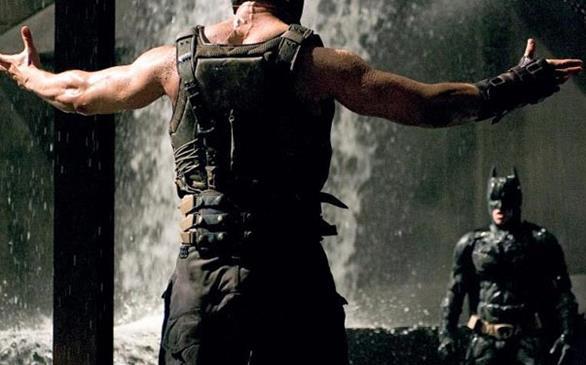
In the wake of the Aurora shootings, the more conservative and religious elements of the American press immediately turned on cinema as the motivation for a motiveless and abhorrent catastrophe. James Holmes' sadistic killing and wounding of tens of innocent audience members has raised the question that seems to be appear once in a generation – does watching violent films result in violent behaviour?
To believe such a proposition to be true is incredibly insulting to the audience and to film-makers. Anyone who holds such a view is at best ignorant and at worst suggestible to the point of lunacy. I have watched a lot of movies. I therefore have also watched a lot of movies containing scenes of brutality, abuse and sexual violence. However, I have at no point during watching such scenes considered replicating what I see on screen in real life. This is probably because I, like every other sane member of a cinema audience, can distinguish reality from fiction. The argument that cinema causes violence cannot really hold any weight until a mentally and emotionally stable person, with a happy upbringing and social life, suddenly watches a movie and is then transformed into a murdering psychopath. I have yet to hear of such an occurrence, but feel that if a person could do something as atrocious as what happened in Aurora, watching violent movies was probably the least of their problems.
The American Right’s necessity for a quick fix answer to a complex tragedy also seems to be incredibly biased. Films are blamed for violence despite passing through test screenings and national film certification committees in order to ensure that the filmmakers’ message successfully reaches an appropriate audience, in context. Yet no one tests real life on an audience to check they understand it properly. Real life isn’t given age-appropriate rating. Any kids film released in a given week won’t include murder, rape, war, abuse or abduction – but you can guarantee in that week the news will. The difference is that you don’t get to leave reality with your kids when the lights go up and discuss how the villain’s voice sounded. The safety of context and fiction is gone. Yet films are still targeted before the news media as the cause of violence.
The Legion of Decency, a US Catholic organisation, were so sure of the effect films had on immoral behaviour that they created their own film rating system - this including the ‘O’ rating (morally offensive) and the ‘C’ rating (condemned). If a film was given the ‘C’ rating by the Legion of Decency, Catholics were banned from seeing it. Some examples of ‘C’s include Some Like It Hot, Psycho, Spartacus, The Good, The Bad and The Ugly, The Rocky Horror Picture Show and Taxi Driver. Whilst Catholics of all ages were banned from seeing these movies, they are still encouraged from childhood to read The Bible. The Bible does not have an age rating, and tells its reader at several points that it is not fictional, but the God’s-honest truth. It also contains a plethora of passages explicitly encouraging genocide, public execution, homophobia, xenophobia and the subjugation of women as well as talk of demons and hellfire waiting for those that don’t comply with the will of the constantly mind-reading judge.
Why is it then that every Catholic does not literally follow the word of The Bible? You can read it at any age, and it is not presented as fiction, so why do Catholics not spend their days hunting Caananites and stoning people to death for breaking the Sabbath? It’s probably because they interpret the subject matter in context, ask questions, and draw their own conclusions about how it is applicable to their lives. It would therefore be much appreciated if the conservative and religious elements of the American press could allow movie-going audiences to do the same, and leave films alone whenever tragedy rears its ugly head. Nobody wants the horrors they may see on screen to occur in real-life; but the violence in films can provide us with an understanding of how the ugly side of life may look, yet within the safe, detached environment and the knowledge that it’s only a movie.

No comments:
Post a Comment