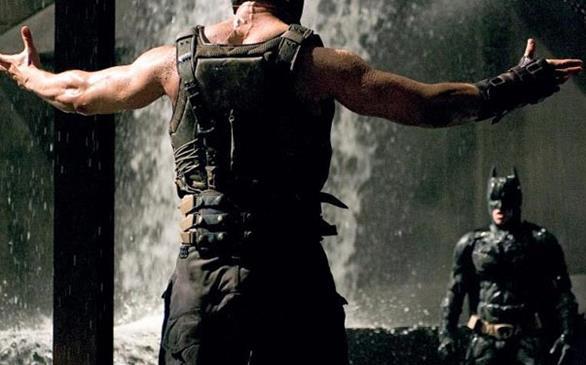
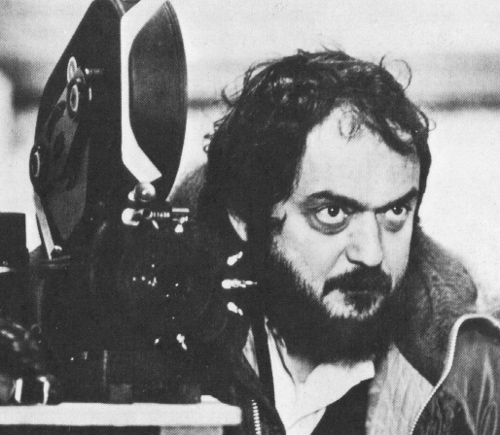
With Avengers, Prometheus, The Amazing Spiderman and The Dark Knight Rises behind us – a contentious summer blockbuster season has drawn to a close, amongst cheers of excitement and groans of over-hype. So what’s the next big movie to look forward to? And what will flop like a decapitated android? Here’s a quick run down of 20 of the biggest features hitting our screens in the next six months.
AUGUST
The Bourne Legacy
Dir: Tony Gilroy. Stars: Jeremy Renner, Edward Norton, Rachel Weisz.
Bourne, but without Bourne. Legacy instead follows the parallel storyline of assassin Aaron Cross, and his battle against the system that created him.
Brave

Dir: Mark Andrews & Brenda Chapman. Stars (voices): Kelly Macdonald, Billy Connolly, Emma Thompson, Julie Walters, Robbie Coltrane.
This original Disney/Pixar story follows a strong Celtic Princess who must rely on her bravery and archery skills in order to undo a mythical curse.
The Expendables 2
Dir: Simon West. Stars: Sylvester Stallone, Jason Statham, Bruce Willis, Liam Hemsworth, Arnold Schwarzenegger, Jean-Claude Van Damme, Jet Li, Chuck Norris, Dolph Lundgren, Terry Crews.
The plot is superfluous. All of the people above are in it. Plus guns and explosions.
The Watch
Dir: Akiva Schaffer. Stars: Ben Stiller, Jonah Hill, Vince Vaughn, Richard Ayoade
Co-written by Seth Rogen, this sci-fi comedy follows a neighbourhood watch group who must defend their sleepy suburb from alien invasion.
SEPTEMBER
Lawless
 Dir: John Hillcoat. Stars: Tom Hardy, Gary Oldman, Guy Pearce, Shia LaBeouf, Jessica Chastain
This original Disney/Pixar story follows a strong Celtic Princess who must rely on her bravery and archery skills in order to undo a mythical curse.
The Expendables 2
Dir: Simon West. Stars: Sylvester Stallone, Jason Statham, Bruce Willis, Liam Hemsworth, Arnold Schwarzenegger, Jean-Claude Van Damme, Jet Li, Chuck Norris, Dolph Lundgren, Terry Crews.
The plot is superfluous. All of the people above are in it. Plus guns and explosions.
The Watch
Dir: Akiva Schaffer. Stars: Ben Stiller, Jonah Hill, Vince Vaughn, Richard Ayoade
Co-written by Seth Rogen, this sci-fi comedy follows a neighbourhood watch group who must defend their sleepy suburb from alien invasion.
SEPTEMBER
Lawless
 Dir: John Hillcoat. Stars: Tom Hardy, Gary Oldman, Guy Pearce, Shia LaBeouf, Jessica Chastain
A bootlegging gang of brothers in depression-era Virginia are threatened by a corrupt Sheriff who is after a cut of their profits.
Dredd 3D
Dir: Pete Travis. Stars: Karl Urban, Olivia Thrilby, Lena Headey
Remake of Stallone’s 1995 action thriller flop set in a dystopian future in which urban cops are given the powers of judge, jury and executioner.
OCTOBER
Taken 2
Dir: Olivier Megaton. Stars: Liam Neeson, Maggie Grace, Famke Janssen
In Taken, criminals abduct Liam Neeson’s daughter, so he efficiently and mercilessly kills them all. This time, the criminals have taken his wife. Clever.
On The Road
Dir: Walter Salles. Stars: Garrett Hedlund, Sam Riley, Kristen Stewart, Viggo Mortensen, Amy Adams, Kirsten Dunst, Steve Buschemi
Big-screen adaptation of Jack Kerouac’s autobiographical epic, exploring Beat culture in post-war America.
Taken 2
Dir: Olivier Megaton. Stars: Liam Neeson, Maggie Grace, Famke Janssen
In Taken, criminals abduct Liam Neeson’s daughter, so he efficiently and mercilessly kills them all. This time, the criminals have taken his wife. Clever.
On The Road
Dir: Walter Salles. Stars: Garrett Hedlund, Sam Riley, Kristen Stewart, Viggo Mortensen, Amy Adams, Kirsten Dunst, Steve Buschemi
Big-screen adaptation of Jack Kerouac’s autobiographical epic, exploring Beat culture in post-war America.
Skyfall

Dir: Sam Mendes. Stars: Daniel Craig, Ralph Fiennes, Judi Dench, Javier Bardem, Ben Whishaw
James Bond must hunt down and eliminate a threat facing MI6, no matter how personal the cost. Also, Q’s back. So expect plenty of gadgets and product placement.
Frankenweenie
Dir: Tim Burton. Stars: Martin Landau, Martin Short, Winona Ryder, Christopher Lee
Tim Burton returns to his stop-motion roots with a film that doesn’t feature Johnny Depp or Helena Bonham Carter. Could this be a return to form?
NOVEMBER
The Master
James Bond must hunt down and eliminate a threat facing MI6, no matter how personal the cost. Also, Q’s back. So expect plenty of gadgets and product placement.
Frankenweenie
Dir: Tim Burton. Stars: Martin Landau, Martin Short, Winona Ryder, Christopher Lee
Tim Burton returns to his stop-motion roots with a film that doesn’t feature Johnny Depp or Helena Bonham Carter. Could this be a return to form?
NOVEMBER
The Master

Dir: Paul Thomas Anderson. Stars: Joaquin Phoenix, Philip Seymour Hoffman, Amy Adams
The brooding trailers don’t give much away. Anderson’s latest offering follows an intellectual whose faith-based organization begins to catch on in America.
The brooding trailers don’t give much away. Anderson’s latest offering follows an intellectual whose faith-based organization begins to catch on in America.
Rise Of The Guardians
Dir: Peter Ramsey. Stars (voices): Hugh Jackman, Alec Baldwin, Isla Fisher, Jude Law, Chris Pine
DECEMBER
The Hobbit: An Unexpected Journey
Dir: Peter Ramsey. Stars (voices): Hugh Jackman, Alec Baldwin, Isla Fisher, Jude Law, Chris Pine
Santa, The Easter Bunny, The Tooth Fairy, Jack Frost and The Sandman unite to take on The Boogeyman. Conceptually confusing fare for gullible kids.
DECEMBER
The Hobbit: An Unexpected Journey

Dir: Peter Jackson. Stars: Martin Freeman, Sir Ian McKellen, Elijah Wood, Andy Serkis, Cate Blanchett, Hugo Weaving, Christopher Lee, Evangeline Lily, Orlando Bloom, Billy Connolly, Bret McKenzie
From the director of The Lord Of The Rings, comes the first in a trilogy of films following Bilbo’s early adventures with the Dwarves seeking Smaug The Dragon’s stolen treasure.
The Great Gatsby
Dir: Baz Luhrmann. Stars: Leonardo DiCaprio, Cary Mulligan, Tobey Maguire, Isla Fisher, Joel Edgerton, Amitabh Bachchan
Stylised retelling of Fitzgerald’s classic novel. Set for a wide 3D release - and featuring the God of Bollywood - this is set to make a lot, internationally.
JANUARY
Gangster Squad
Dir: Ruben Fleischer. Stars: Ryan Gosling, Emma Stone, Sean Penn, Giovanni Ribisi, Josh Brolin, Nick Nolte
A neo-noir chronicling of the LAPD's fight to keep the East Coast Mafia out of Los Angeles in the 1940s and 50s.
Les Misérables
Dir: Tom Hooper. Stars: Hugh Jackman, Russell Crowe, Anne Hathaway, Amanda Seyfried, Helena Bonham Carter, Sacha Baron Cohen
Film adaptation of the hugely successful stage musical in which paroled prisoner Jean Valjean seeks redemption during the French Revolution.
Django Unchained
From the director of The Lord Of The Rings, comes the first in a trilogy of films following Bilbo’s early adventures with the Dwarves seeking Smaug The Dragon’s stolen treasure.
The Great Gatsby
Dir: Baz Luhrmann. Stars: Leonardo DiCaprio, Cary Mulligan, Tobey Maguire, Isla Fisher, Joel Edgerton, Amitabh Bachchan
Stylised retelling of Fitzgerald’s classic novel. Set for a wide 3D release - and featuring the God of Bollywood - this is set to make a lot, internationally.
JANUARY
Gangster Squad
Dir: Ruben Fleischer. Stars: Ryan Gosling, Emma Stone, Sean Penn, Giovanni Ribisi, Josh Brolin, Nick Nolte
A neo-noir chronicling of the LAPD's fight to keep the East Coast Mafia out of Los Angeles in the 1940s and 50s.
Les Misérables
Dir: Tom Hooper. Stars: Hugh Jackman, Russell Crowe, Anne Hathaway, Amanda Seyfried, Helena Bonham Carter, Sacha Baron Cohen
Film adaptation of the hugely successful stage musical in which paroled prisoner Jean Valjean seeks redemption during the French Revolution.
Django Unchained

Dir: Quentin Tarantino. Stars: Jamie Foxx, Christoph Waltz, Leonardo DiCaprio, Samuel L Jackson, Don Johnson, Kerry Washington, M.C. Gainey, Zoe Bell
Freed slave, Django, becomes deputy to a bounty hunter and sets out on a journey through the Deep South, seeking revenge against a cruel plantation owner.
Lincoln
Dir: Steven Spielberg. Stars: Daniel Day-Lewis, Joseph Gordon-Levitt, Tommy Lee Jones, Sally Field, Jared Harris
Steven Spielberg’s biopic follows Daniel Day-Lewis’ Abraham Lincoln as he leads the North to victory in the American Civil War.
FEBRUARY
Hitchcock
Freed slave, Django, becomes deputy to a bounty hunter and sets out on a journey through the Deep South, seeking revenge against a cruel plantation owner.
Lincoln
Dir: Steven Spielberg. Stars: Daniel Day-Lewis, Joseph Gordon-Levitt, Tommy Lee Jones, Sally Field, Jared Harris
Steven Spielberg’s biopic follows Daniel Day-Lewis’ Abraham Lincoln as he leads the North to victory in the American Civil War.
FEBRUARY
Hitchcock

Dir: Sacha Gervasi. Stars: Anthony Hopkins, Scarlett Johansson, Jessica Biel, Helen Mirren, Toni Collette
Adaptation of Alfred Hitchcock And The Making Of Psycho. An exploration of the effect Psycho had on its filmmaker, its cast, and the cinematic landscape.
A Good Day To Die Hard
Dir: John Moore. Stars: Bruce Willis, Jai Courtney, Sebastian Koch, Patrick Stewart (rumoured)
John McClane returns in the fifth Die Hard movie. This time with his son, though probably still without promotion, he fights evil forces in Russia.
Adaptation of Alfred Hitchcock And The Making Of Psycho. An exploration of the effect Psycho had on its filmmaker, its cast, and the cinematic landscape.
A Good Day To Die Hard
Dir: John Moore. Stars: Bruce Willis, Jai Courtney, Sebastian Koch, Patrick Stewart (rumoured)
John McClane returns in the fifth Die Hard movie. This time with his son, though probably still without promotion, he fights evil forces in Russia.