Thursday, 27 September 2012

...Rich Man, Poor Man, Beggar Man, Thief

Killing Them Softly
Dir: Andrew Dominik
Stars: Brad Pitt, Ray Liotta, James Gandolfini


The latest film from Andrew Dominik (Chopper, The Assassination of Jesse James…) is quite a difficult one to pin down. Set against the backdrop of the 2008 US Presidential Election and the beginning of the global financial crisis, Killing Them Softly follows the interlocking activities of a few downbeat criminals - some young and stupid, others old and hardened - as they attempt to salvage a form of living beneath the radar, whilst the government is focussed on bailing out the corporate world slowly falling around them.

The film was interesting in that following the story was not entirely necessary to enjoying the action. The gorgeous cinematography and stellar performances meant the real beauty of the picture lay in its nuances. The look of distain in the eyes of a weather-beaten criminal, the way in which light plays off the window of a diner, or the imaginative visual dissection of an act of killing can all lead you to being distracted from what is actually being said by the characters on screen; and instead lead you to becoming lost in the picture’s subtle beauty along the way.

That is not to say that acting is forgettable. Whilst there is no real central character in Killing Them Softly, there is instead an ensemble of actors who have plied their trade portraying members of society’s darker echelons. There is also a very, very deep pit of dark humour to be found in a script that exudes an air of tired masculinity - lines like “You’re telling me to stop drinking? I was drinking before you came out of your fathers cock!” punctuate the exchanges between tired criminals attempting to control their own private economy as the greed and recklessness of a few have sent it spiralling into chaos.

Killing Them Softly is a crime drama with inspired pockets of aestheticised violence, yet it doesn’t have the broad, overlapping themes of Lawless or the punchy neo-noir feel of Drive. Instead, it is a slow, macabre tale of grizzly masculinity struggling to maintain a grasp on power in the wake of double-crossing and distrust in dingy, smoke-filled rooms - and will therefore greatly engage those who enjoyed Tinker, Tailor, Soldier, Spy. Jackie Cogan’s final ruminations on the selfish, aggressive and business-like nature of modern America, contrasted with Obama’s ideal of a truly United states, offers a perfect ending to brilliantly subtly and nihilistic film.

8 / 10

Frighteningly Thought-Provoking Family Fun

Paranorman
Dirs: Chris Butler & Sam Fell
Stars: Kodi Smitt-McPhee, Tucker Albrizzi, Christopher Mintz-Plasse


Paranorman tells the story of a young horror film fan who is surrounded by the ghosts of previous residents of his small American town. Ostracised at school for being “ab-Norman”, he befriends fellow outsider, Neil, and together they must prevent the supernatural catastrophe that will occur at his witch-hunting community’s fast approaching anniversary.

During Paranorman’s first act you find yourself ignoring that the major plot strand seems to be following in the footsteps of established popcorn favourites like The Sixth Sense or Troll 2. This is because the brilliance of the film’s opening lies in the little gags and horror movie references that cover Norman’s day-to-day life; and the enjoyable character development that wonderfully illustrates the rôle of movies in an outsider’s childhood, akin to last year’s Super 8. The plot then takes a rather mature and unexpected turn, and after an adventure full of genuine laughs and frights, the final scenes of Paranorman leave the audience with much food for thought.

The film is also a great technical achievement for Laika studios, the creators of Coraline. In an industry that has become overloaded by movies more concerned with merchandising profits than entertainment, cinematographer Tristian Oliver (Wallace & Gromit, Chicken Run, Fantastic Mr. Fox) has managed to create a visually extraordinary world for Norman to inhabit, as well as terrifically convincing special effects and characterisation through the strenuous and mind-bogglingly patient art of stop-motion animation. Moreover, a supporting cast including Anna Kendrick, Casey Affleck, Jeff Garlin and John Goodman help to bring the population of Norman’s town to life with great warmth and vigour.

Paranorman is definitely not a children’s film, it contains genuinely spooky scenes that go far beyond “mild peril” and its references, innuendo and thought-provoking themes make it almost more enjoyable for adults. This family stop-motion horror film deeply challenges the small town mentality of immediately confronting what is unknown with bigotry, hatred and fear – and instead advises children and adults alike to take the time to listen to those who are ignored and embrace their individuality.

8 / 10

Sunday, 9 September 2012

True Bromance

Untouchable (Intouchables)
Dir: Olivier Nakache and Eric Toledano
Stars: Omar Sy, François Cluzet, Anne Le Ny


After becoming the second most successful French film of all time within the first nine weeks of its domestic run, dividing audiences and critics along the way, I was desperate to see the first and only screening of Untouchable in Manchester this week – at the city’s crappest multiplex. The schmaltzy publicity surrounding the movie set my expectations as low as the quality of the cinema’s seats, but I was pleasantly surprised by Untouchable’s charismatic performances and thoroughly unpretentious charm.

The story follows the development of a friendship between two men: Phillipe, an aristocratic quadriplegic with a diminished appetite for life; and Driss, a young man with buckets of charisma and low ambitions. After Phillipe’s interview process for a new carer only attracts pitying and money-orientated applicants, he is immediately attracted to Driss - whose frankness and lack of judgement seals him the job. We then follow the friendship that develops between the two. One rich, white, “cultured” and with a dying libido; the other poor, black, young and audacious.

Although the premise sounds unoriginal, and may remind you of predictable Hollywood fare such as The Bucket List and The Blind Side, the movie itself is an absolute joy. Never overly exploiting the emotional strings that could readily be pulled, it is a witty and uncondescending comedy drama that had the audience smiling the whole way through. Omar Sy’s performance in particular exhibits the same clinical comic timing and infectious charisma that has served Roberto Benigni and Jean Dujardin so well with English-speaking audiences in recent years. The superb editing and diverse soundtrack also prevent the film from ever being a labour to watch – and allow it to switch between heartwarming and heartbreaking with terrific subtlety.

Not unlike last year’s The Artist, it seems that again France may provide us with the year’s most charming, uplifting and feel-good movie. Untouchable will undoubtedly annoy some due to its seemingly clichéd premise and flawed publicity campaign, but don’t let this misrepresentation deter you. Leave cynicism behind, and enjoy the film for what it is – an absolute treat.

9 / 10

Thursday, 6 September 2012

The Assassination Of A Bootlegging Gangster Movie By The Misguided Guy Pearce

Lawless
Dir: John Hillcoat
Stars: Shia LeBeouf, Tom Hardy, Jessica Chastain


Lawless is a rough crime drama set in Virginia during The Great Depression. It follows the true story of the three Bondurant brothers who made their fortune producing and selling moonshine, despite fierce opposition from their competitors and the law. Of course the rise of the gangster is never smooth; and the Bondurants business is constantly muddied by intimidation, violence, vengeance and pain.

The power of Lawless lies mainly in its cast. Tom Hardy grunts and lurches his way through the film as the indomitable Forrest, a mountain of masculinity that Hardy oddly described as playing with the demeanour of “an old lesbian” yet the subtle authority of “the grandmother from Sylvester and Tweety”. Shia LeBeouf delivers a career-best performance as the young Jack Bondurant, whose involvement in a variety of subplots allows him to display more versatility than would be possible in a lifetime of Transformers movies. Jessica Chastain also proves the old edict that “there are no small parts, only small actors” and despite her limited screen time, steals nearly every scene that she’s in with her strength and subtlety.

However, there is a single performance in the film which is not only unconvincing from an actor who we have seen do better, but also exemplifies Lawless’ weaknesses in general. Guy Pearce plays Charlie Rakes, an intimidating Chicago police officer who is looking to shake down the Bondurants by any means possible. Pearce insisted on designing a character with a ‘distinctive’ look (which is as off-putting as his rôle in Prometheus); and his performance is incredibly misguided. In amongst the dustbowl subtlety of the rest of the ensemble, Pearce acts more like a cross between Hans Landa and Goldfinger – a maniacal caricature of a villain whose recklessness leaves you wondering how he climbed to such a high position in the police without being sectioned.

Pearce’s outlandish performance brings down most of the scenes he’s in, puncturing the drama of the true story and diluting the audience’s suspension of disbelief. Whilst there are many strong performances in the film, they are sometimes hampered by Nick Cave's flawed script that only really gives Shia LeBeouf’s character room to develop; resulting in Gary Oldman and Mia Wasikowksa only appearing on screen for a few minutes.

Lawless is bloody and brooding, and features some great acting performances. However, Guy Pearce’s problematic characterisation and a script lacking in direction may leave it dry as a dustbowl come awards season.

7 / 10

Friday, 24 August 2012

Faking It

The Imposter
Dir: Bart Layton


Occasionally, a film comes along that I strongly recommend others to see, but with the caveat that they don’t attempt to read anything about the film’s plot beforehand. Recent examples have included Capturing The Freidmans, the exquisitely disturbing documentary uncovering a suburban sex scandal; and Catfish, the Facebook generation’s twisted road trip with a difference. The Imposter should certainly be seen as another of these movies. Its unbelievable premise, gripping plot and spectacular thematic exploration leave you having to remind yourself that you are watching a documentary, and not a sophisticated crime thriller. 

The Imposter focuses on the story of Frédéric Bourdin, a dark 23-year-old Frenchman who, in 1997, successfully convinced a Texan family that he was their missing blonde, blue-eyed, 16-year-old son. Through interviews with Frédéric and the boy’s family, as well as dramatic reconstructions, The Imposter explores a truly fascinating story of deceit, suspicion, loss, and the desire to be loved. 

It is not just the events in the film that are so compelling, but also the prowess with which debutant director Bart Layton and cinematographers Lynda Hall (Dreams Of A Life) and Erik Wilson (Submarine, Tyrannosaur) capture the emotion of those involved, and spectacularly recreate the gaps in the subjects’ stories. The dark visuals, smooth match cuts and aching soundscapes make it impossible not to invest and empathise with the people on screen. Yet, within this web of lies and questions, the notion of truth is constantly fleeting, and as the story unravels it becomes increasingly difficult to trust and believe what is presented on screen. 

Regardless of how you feel leaving the cinema, The Imposter is an incredibly well executed film, which is guaranteed to engage every member of the audience before leaving them desperate to discuss and discover more.

10/10

Wednesday, 1 August 2012

Bear Jokes

Ted
Dir: Seth MacFarlane
Stars: Mark Wahlberg, Seth MacFarlane, Mila Kunis


Ted begins in Boston in 1985, where a young boy’s Christmas wish comes true and his toy teddy bear is magically brought to life. Ted (voiced and performed through motion capture by Family Guy creator Seth MacFarlane) enjoys a brief career as an 80s child star, before we jump to the present day where he now exists as a layabout stoner buddy, and general bad influence, to his 35 year old childhood friend, John (Mark Wahlberg). As the film progresses, Ted and John’s immature friendship based around getting high and watching Flash Gordon begins to take a strain on John’s relationship with his more mature girlfriend, Lori (Mila Kunis).

For a film about an anthropomorphised, pot-smoking, foul-mouthed and casually racist teddy bear – Ted begins very strongly. There’s loads of laughs to be had just watching Ted and John chilling on the couch and making pop-culture jokes, which are reminiscent of Family Guy’s glory days. There are also great comedic performances from the supporting cast, including a handful of amusing cameos. The first hour of Ted is well paced and had me regularly laughing out loud.

However, MacFarlene then seemed to remember he was writing a Hollywood movie and not an anarchic 20-minute TV episode. Staple story conventions thus creep in, channelling the likes of Knocked Up and Toy Story 2. The final act of the film, therefore, steers towards a predictable ending with significantly less laughs. Yet, annoyingly, the story didn’t need to be so telegraphed. More of the early vulgar humour would have been strong enough to entertain the movie’s key demographic, and some of the finest comedies – such as This Is Spinal Tap – manage to keep up the laughs when characters hit similar problems to MacFarlane’s.

The majority of Ted is crude, close to the mark and very very funny. Unfortunately, the schmaltzy and predictable story telling towards the end let down what could have been a much more entertaining film. Hopefully MacFarlane’s next picture will stick to pleasing the immature stoners, rather than attempting to grow up.

7 / 10

Sunday, 29 July 2012

(196) Days Of Movies

With Avengers, Prometheus, The Amazing Spiderman and The Dark Knight Rises behind us – a contentious summer blockbuster season has drawn to a close, amongst cheers of excitement and groans of over-hype. So what’s the next big movie to look forward to? And what will flop like a decapitated android? Here’s a quick run down of 20 of the biggest features hitting our screens in the next six months. 

AUGUST

The Bourne Legacy
Dir: Tony Gilroy. Stars: Jeremy Renner, Edward Norton, Rachel Weisz.
Bourne, but without Bourne. Legacy instead follows the parallel storyline of assassin Aaron Cross, and his battle against the system that created him.

Brave

Dir: Mark Andrews & Brenda Chapman. Stars (voices): Kelly Macdonald, Billy Connolly, Emma Thompson, Julie Walters, Robbie Coltrane.  
This original Disney/Pixar story follows a strong Celtic Princess who must rely on her bravery and archery skills in order to undo a mythical curse.

The Expendables 2
Dir: Simon West. Stars: Sylvester Stallone, Jason Statham, Bruce Willis, Liam Hemsworth, Arnold Schwarzenegger, Jean-Claude Van Damme, Jet Li, Chuck Norris, Dolph Lundgren, Terry Crews.
The plot is superfluous. All of the people above are in it. Plus guns and explosions.

The Watch
Dir: Akiva Schaffer. Stars: Ben Stiller, Jonah Hill, Vince Vaughn, Richard Ayoade
Co-written by Seth Rogen, this sci-fi comedy follows a neighbourhood watch group who must defend their sleepy suburb from alien invasion.

SEPTEMBER

Lawless
Dir: John Hillcoat. Stars: Tom Hardy, Gary Oldman, Guy Pearce, Shia LaBeouf, Jessica Chastain 
A bootlegging gang of brothers in depression-era Virginia are threatened by a corrupt Sheriff who is after a cut of their profits. 

Dredd 3D
Dir: Pete Travis. Stars: Karl Urban, Olivia Thrilby, Lena Headey 
Remake of Stallone’s 1995 action thriller flop set in a dystopian future in which urban cops are given the powers of judge, jury and executioner. 

OCTOBER

Taken 2
Dir: Olivier Megaton. Stars: Liam Neeson, Maggie Grace, Famke Janssen
In Taken, criminals abduct Liam Neeson’s daughter, so he efficiently and mercilessly kills them all. This time, the criminals have taken his wife. Clever.

On The Road
Dir: Walter Salles. Stars: Garrett Hedlund, Sam Riley, Kristen Stewart, Viggo Mortensen, Amy Adams, Kirsten Dunst, Steve Buschemi
Big-screen adaptation of Jack Kerouac’s autobiographical epic, exploring Beat culture in post-war America. 

Skyfall 
Dir: Sam Mendes. Stars: Daniel Craig, Ralph Fiennes, Judi Dench, Javier Bardem, Ben Whishaw 
James Bond must hunt down and eliminate a threat facing MI6, no matter how personal the cost. Also, Q’s back. So expect plenty of gadgets and product placement. 

Frankenweenie
Dir: Tim Burton. Stars: Martin Landau, Martin Short, Winona Ryder, Christopher Lee
Tim Burton returns to his stop-motion roots with a film that doesn’t feature Johnny Depp or Helena Bonham Carter. Could this be a return to form?

NOVEMBER

The Master 
Dir: Paul Thomas Anderson. Stars: Joaquin Phoenix, Philip Seymour Hoffman, Amy Adams
The brooding trailers don’t give much away. Anderson’s latest offering follows an intellectual whose faith-based organization begins to catch on in America. 

Rise Of The Guardians
Dir: Peter Ramsey. Stars (voices): Hugh Jackman, Alec Baldwin, Isla Fisher, Jude Law, Chris Pine

Santa, The Easter Bunny, The Tooth Fairy, Jack Frost and The Sandman unite to take on The Boogeyman. Conceptually confusing fare for gullible kids. 

DECEMBER

The Hobbit: An Unexpected Journey 
Dir: Peter Jackson. Stars: Martin Freeman, Sir Ian McKellen, Elijah Wood, Andy Serkis, Cate Blanchett, Hugo Weaving, Christopher Lee, Evangeline Lily, Orlando Bloom, Billy Connolly, Bret McKenzie
From the director of The Lord Of The Rings, comes the first in a trilogy of films following Bilbo’s early adventures with the Dwarves seeking Smaug The Dragon’s stolen treasure.

The Great Gatsby
Dir: Baz Luhrmann. Stars: Leonardo DiCaprio, Cary Mulligan, Tobey Maguire, Isla Fisher, Joel Edgerton, Amitabh Bachchan
Stylised retelling of Fitzgerald’s classic novel. Set for a wide 3D release - and featuring the God of Bollywood - this is set to make a lot, internationally.

JANUARY

Gangster Squad
Dir: Ruben Fleischer. Stars: Ryan Gosling, Emma Stone, Sean Penn, Giovanni Ribisi, Josh Brolin, Nick Nolte
A neo-noir chronicling of the LAPD's fight to keep the East Coast Mafia out of Los Angeles in the 1940s and 50s.

Les Misérables
Dir: Tom Hooper. Stars: Hugh Jackman, Russell Crowe, Anne Hathaway, Amanda Seyfried, Helena Bonham Carter, Sacha Baron Cohen
Film adaptation of the hugely successful stage musical in which paroled prisoner Jean Valjean seeks redemption during the French Revolution.

Django Unchained 
Dir: Quentin Tarantino. Stars: Jamie Foxx, Christoph Waltz, Leonardo DiCaprio, Samuel L Jackson, Don Johnson, Kerry Washington, M.C. Gainey, Zoe Bell
Freed slave, Django, becomes deputy to a bounty hunter and sets out on a journey through the Deep South, seeking revenge against a cruel plantation owner.

Lincoln
Dir: Steven Spielberg. Stars: Daniel Day-Lewis, Joseph Gordon-Levitt, Tommy Lee Jones, Sally Field, Jared Harris
Steven Spielberg’s biopic follows Daniel Day-Lewis’ Abraham Lincoln as he leads the North to victory in the American Civil War.

FEBRUARY

Hitchcock 
Dir: Sacha Gervasi. Stars: Anthony Hopkins, Scarlett Johansson, Jessica Biel, Helen Mirren, Toni Collette
Adaptation of Alfred Hitchcock And The Making Of Psycho. An exploration of the effect Psycho had on its filmmaker, its cast, and the cinematic landscape.

A Good Day To Die Hard
Dir: John Moore. Stars: Bruce Willis, Jai Courtney, Sebastian Koch, Patrick Stewart (rumoured)
John McClane returns in the fifth Die Hard movie. This time with his son, though probably still without promotion, he fights evil forces in Russia.


Saturday, 28 July 2012

It's Only A Movie


In the wake of the Aurora shootings, the more conservative and religious elements of the American press immediately turned on cinema as the motivation for a motiveless and abhorrent catastrophe. James Holmes' sadistic killing and wounding of tens of innocent audience members has raised the question that seems to be appear once in a generation – does watching violent films result in violent behaviour?

To believe such a proposition to be true is incredibly insulting to the audience and to film-makers. Anyone who holds such a view is at best ignorant and at worst suggestible to the point of lunacy. I have watched a lot of movies. I therefore have also watched a lot of movies containing scenes of brutality, abuse and sexual violence. However, I have at no point during watching such scenes considered replicating what I see on screen in real life. This is probably because I, like every other sane member of a cinema audience, can distinguish reality from fiction. The argument that cinema causes violence cannot really hold any weight until a mentally and emotionally stable person, with a happy upbringing and social life, suddenly watches a movie and is then transformed into a murdering psychopath. I have yet to hear of such an occurrence, but feel that if a person could do something as atrocious as what happened in Aurora, watching violent movies was probably the least of their problems.

The American Right’s necessity for a quick fix answer to a complex tragedy also seems to be incredibly biased. Films are blamed for violence despite passing through test screenings and national film certification committees in order to ensure that the filmmakers’ message successfully reaches an appropriate audience, in context. Yet no one tests real life on an audience to check they understand it properly. Real life isn’t given age-appropriate rating. Any kids film released in a given week won’t include murder, rape, war, abuse or abduction – but you can guarantee in that week the news will. The difference is that you don’t get to leave reality with your kids when the lights go up and discuss how the villain’s voice sounded. The safety of context and fiction is gone. Yet films are still targeted before the news media as the cause of violence.

The Legion of Decency, a US Catholic organisation, were so sure of the effect films had on immoral behaviour that they created their own film rating system - this including the ‘O’ rating (morally offensive) and the ‘C’ rating (condemned). If a film was given the ‘C’ rating by the Legion of Decency, Catholics were banned from seeing it. Some examples of ‘C’s include Some Like It Hot, Psycho, Spartacus, The Good, The Bad and The Ugly, The Rocky Horror Picture Show and Taxi Driver. Whilst Catholics of all ages were banned from seeing these movies, they are still encouraged from childhood to read The Bible. The Bible does not have an age rating, and tells its reader at several points that it is not fictional, but the God’s-honest truth. It also contains a plethora of passages explicitly encouraging genocide, public execution, homophobia, xenophobia and the subjugation of women as well as talk of demons and hellfire waiting for those that don’t comply with the will of the constantly mind-reading judge.

Why is it then that every Catholic does not literally follow the word of The Bible? You can read it at any age, and it is not presented as fiction, so why do Catholics not spend their days hunting Caananites and stoning people to death for breaking the Sabbath? It’s probably because they interpret the subject matter in context, ask questions, and draw their own conclusions about how it is applicable to their lives. It would therefore be much appreciated if the conservative and religious elements of the American press could allow movie-going audiences to do the same, and leave films alone whenever tragedy rears its ugly head. Nobody wants the horrors they may see on screen to occur in real-life; but the violence in films can provide us with an understanding of how the ugly side of life may look, yet within the safe, detached environment and the knowledge that it’s only a movie.


Thursday, 12 July 2012

Sex, Lies, And A Chicken Leg

Killer Joe
Dir: William Friedkin
Stars: Matthew McConaughey, Emile Hirsch, Juno Temple


Due to its nature, dark comedy is a subgenre that will always alienate a large percentage of the average cinema-going public. Yet William Friedkin’s latest offering, Killer Joe, dances the line between chuckles and chills with such a careless lack of aplomb that it is bound to find very few audience members who will be completely satisfied with the film by the end credits.

The film revolves around an uninhibited, vacuous and morally repugnant redneck family who seek to have one of their number killed in order to cash in on her $50,000 life insurance policy. In order to get the job done, they hire cop-come-hitman ‘Killer’ Joe Cooper to bump her off; but without the ability to pay him up front, their naive lolita daughter is accepted by Killer Joe as collateral. Jealousy is ignited, deception uncovered and brutality dispensed before a messy final sequence involving sexual humiliation, copious violence, and the gross misuse of a fried chicken leg.

Although Killer Joe features an intense, career-changing performance from Matthew McConaughey, and is in parts both gross and hilarious – by the end of the film it is difficult to totally appreciate what exactly Friedkin is trying to do. When it’s flippant and ironic, there are certainly way more laughs to be had in Killer Joe than some recent mainstream comedies like 30 Minutes Or Less. Yet when at its most sick and malevolent, the viewer is left feeling like a voyeur of the most perverted and amoral kind. This dichotomy between ironic laughs and disgusted groans comes to a head in the final scene, which fails to solidly ground the direction of the film in either camp; with the aforementioned ‘chicken leg’ sequence feeling unnecessarily repulsive.

There is a continuous theme of apathy towards televisual violence that seems to point to some kind of message – although, not unlike Haneke’s Funny Games, it is likely to be seen by most as overshadowed by the frank savagery onscreen. Killer Joe’s scrappy editing and twisted narrative result in a divisive end product, which is likely to delight some, but disgust most.

6 / 10

Tuesday, 10 July 2012

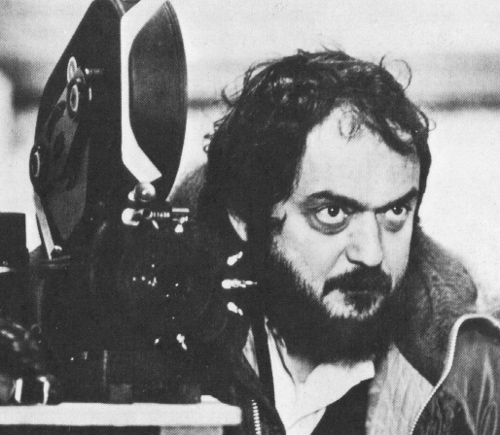
Stanley Kubrick: A Cinematic Odyssey


During a recent trip to Holland, I had the pleasure of attending the Stanley Kubrick Exhibition held at the EYE Film Institute in Amsterdam. The masterfully curated exhibit housed a wealth of material from the life’s work of arguably the most beguiling, ingenious and imaginative filmmaker in the history of cinema.

The exhibition began by showcasing some of Kubrick’s early photography work for Look magazine, including his first professional photograph – that of a newsvendor displaying a look of grief when selling papers reporting the death of Franklin D. Roosevelt. Several other magazine photographs of post-war America led to a small television screen showing Kubrick’s first documentary short Day Of The Fight, beside the camera with which it was shot. 


Boxing was also the focus of his 1955 film Killer’s Kiss, which was projected on the first of the many large screens throughout the exhibit, alongside The Killing. An array of paperwork, from promotional material to budget calculation sheets, offered an insight into Kubrick’s early filmmaking efforts – and his rise to prominence.

These were followed by individual projections of key scenes from each of the director’s more seminal pictures, which perfectly illustrated the scale of his illustrious career. Screenings of Paths Of Glory and Spartacus were flanked by original artwork and continuity sheets, exposing the detail with which grandiose war sequences were planned, alongside the original costumes worn by Kirk Douglas and Laurence Olivier.

Lolita and Dr. Strangleove…, began the unravelling of Kubrick’s strongest period as an auteur. Lolita was played alongside creative correspondence between Kubrick and the book’s author Vladamir Nabokov, as well as angry letters from religious groups denouncing the film. Highlights of the wealth of material surrounding Dr. Strangelove… included the original “Plan R” prop, the notepad on which Kubrick brainstormed potential titles (such as “Dr. Strangelove’s Secret Uses Of Uranus”), a scale model of The War Room, The Bomb itself, and two tickets to the cancelled premiere from the day President Kennedy was shot. There were also a set of stills from the abandoned “pie fight” ending sequence – which despite a five day shoot involving 3,000 custard pies, was dismissed by Kubrick as too farcical for satire.

2001: A Space Odyssey tends to speak for itself, though also featured one of the original ape costumes from the first monolith scene, a functional model of the rotating set used to film the zero-gravity centrifuge walk sequence, and the actual face of HAL-9000. A Clockwork Orange was my personal favourite exhibit. International artwork dedicated to the film surrounded the screen, which was buttressed by the original ivory devotchkas from the milkbar. Kubrick’s several drafts of the script stood alongside the letters of outraged cinemagoers and religious organisations (and a single hand-written letter from a fan demanding the picture feature less violence and more sex). The standout piece was the original droog costume, hat and cane infamously adoned by Malcolm McDowell.

Barry Lyndon was displayed alongside period costumes, and the groundbreaking camera with which it was shot, which allowed for the entire film to neglect artificial light in favour of natural and candle lighting. The Shining exhibit was exceptional; featuring Kubrick’s personal annotated version of Stephen King’s novel, the original costumes worn by the ghostly twin girls, a scale model of the labyrinth, the original axe and knife used during the bathroom sequence, Jack’s typewriter, and the actual photograph of the party at The Outlook Hotel in 1921, headed by Jack Torrance.

Full Metal Jacket played out behind the several books and scripts used to create the final draft, as well as photos of Kubrick and Matthew Modine on set. Private Joker’s original “Born To Kill” helmet was a particular highlight, presented opposite the director’s chair in which Kubrick himself sat. Eyes Wide Shut was projected on the final screen, hauntingly surrounded by all of the original masks and robes used in the central orgy sequence.

A final exhibit was dedicated to two of Kubrick’s unrealised works, Napolean and Aryan Papers. Despite lacking great visual substance, the wealth of information gathered for these two unfinished projects gave perhaps the greatest insight into Kubrick’s intelligence and perfectionism. He read over 500 books on Napolean’s life, and hired a team of historians to research the most minute details of historical events (such as the probable weather conditions during battles) in order to create what he promised movie studios would have been “the greatest film ever made”. A spectacle unsurprisingly cancelled after pre-production ran way over budget. Aryan Papers, involved a similarly obsessive research process into the hiding of Jews during the Holocaust, but was abandoned due to the emotional strain it took on Kubrick. He eventually concluded that an accurate film about the Holocaust was beyond the capacity of cinema, and abandoned the project around the release of Speilberg’s Schindler’s List.

The final piece displayed in the exhibition was Kubrick’s only personal Academy Award statue, received for special effects for 2001: A Space Odyssey. It is difficult to fathom how the man responsible for such breathtaking and iconic contributions to cinema, through incredible emotional and intellectual labour, could be so greatly undervalued by the Hollywood establishment. Yet the diversity and intensity of the body of work behind that single statuette served as an inspirational reminder that fame was never the reason that Stanley Kubrick wished to become involved in cinema. Instead, it was his unrelenting hunger to tell stories, his desire to raise questions, and his perfectionist approach towards every piece of work as having the potential to be the greatest possible contribution to cinema.

For more information on The Stanley Kubrick exhibition, including future dates and locations, please visit: http://www.stanleykubrick.de/eng.php?img=img-l-6&kubrick=news-eng

Tuesday, 19 June 2012

Weak Webb Slows Spidey Down

The Amazing Spider-Man (3D)
Dir: Mark Webb
Stars: Andrew Garfield, Emma Stone, Rhys Ifans


The Amazing Spider-Man begins with Peter Parker in high school. Though an amateur photographer, Peter’s main interest is science - and he bluffs his way into an audience with his deceased father’s ex-partner Dr Curt Connors. After impressing Connors with his knowledge of cross-species genetics, Peter enters a classified area and is bitten by a mutated spider. As his powers and secret identity develop, so too does his relationship with Connors protégé, and Parker’s classmate, Gwen Stacey. But when the desperate Connors attempts to fight his personal weaknesses using the same untested method, he undergoes a more disastrous transformation into “The Lizard”, a creature with a twisted view of how best to ‘cure’ humanity.

The Amazing Spider-Man’s origin story is undoubtedly an improvement on Raimi’s Spider-Man, a decade prior. The characterisation is a lot more realistic, which makes it easier for the audience to feel Parker’s teenage pain, awkwardness and ultimate escapism when he dons the guise of Spider-Man. Emma Stone’s Gwen Stacey is also a welcome replacement for Mary-Jane, who’s sole purpose in Raimi’s films was either to moan or scream. Stacey by contrast, is an intelligent character in her own right, who doesn’t shy away from getting her hands dirty when Spider-Man’s in trouble. Rhys Ifans portrayal of Curt Connors has the same Jekyllian vulnerability seen in Mark Ruffallo’s Bruce Banner earlier this year, although his motives are distorted somewhat as the film progresses.

However, such interesting character development unfortunately does not hold together perfectly with the action. Of course, Spider-Man is foremost a movie that has to entertain; yet the cocky web-slinging CGI hero seems too unlike Garfield’s brooding Peter Parker. The quality of the special effects is largely inconsistent, with POV scenes of Spider-Man diving around the city impressing greatly, whilst his actual battles with The Lizard are considerably less ambitious. The weighty retelling of Parker’s familiar back-story also means that during the dénouement several large plot points, which could have expanded the action, are left undeveloped – and so the ending is a little too simple and unsatisfactory.

Webb has successfully addressed the new demand for superhero movies to be deeper and more human; yet he is not a director adept at providing big-budget action to an audience in the same way as Joss Whedon or Christopher Nolan. The Amazing Spider-Man is therefore the sum of two films, a satisfactory coming-of-age movie and an unchallenging action film. Unfortunately, Webb is not strong enough to convincingly hold the two together.

6 / 10

Sunday, 10 June 2012

Top 5 Rising British Directors

5. Paddy Considine (Tyrannosaur)


An impressive screen presence when at his most troubled (A Room For Romeo Brass, Dead Man’s Shoes) but also at his most comedic (Hot Fuzz, Le Donk), Paddy Considine utilised his film experience to work behind the camera when directing his debut feature film, Tyrannosaur. The result was a painfully affecting piece, full of consummate performances and an uncomfortable mise-en-scène.

4. Richard Ayoade (Submarine, The Double)


After co-creating the oddball comedy Garth Marenghi’s Darkplace, Richard Ayoade built a cult TV following through his rôles in The Mighty Boosh and The IT Crowd, before securing the funding to adapt and direct Submarine for the big screen. In keeping with form, Ayoade managed to perfectly capture the tragic humour within the soul of a misunderstood loner. The future is also bright for Ayoade, who is set to direct The Double – a comedy in which Jesse Eisenberg is driven insane by his doppelganger.

3. Ben Wheatley (Kill List, Sightseers)


Another director to have emerged from British television, Essex-born Ben Wheatley built his career directing alternative comedies The Wrong Door and Ideal before making the jump to film with his low-budget debut, Kill List. The gory and unsettling crime-thriller-horror was an intriguing film somewhere between Lock, Stock… and The Wicker Man that, though critically divisive, was masterfully shot and edited. His next offering, Sightseers, is due for release at the end of 2012, and promises to be a similarly genre-bending macabre comedy.

2. Duncan Jones (Moon, Source Code)


Son of the legendary David Bowie, Duncan Jones’ won the BAFTA for Outstanding Debut in 2008 for Moon. The sci-fi mystery heavily borrowed from Kubrick’s 2001, but was a cold and well-photographed film in its own right. His second film was the similarly mind-bending Source Code. Underrated during a strong cinematic year, Source Code mirrored Moon in developing a high-concept mystery around a powerless protagonist. Jones will seemingly be breaking this mould in the near future, and is currently helming an Ian Fleming biopic slated for 2013.

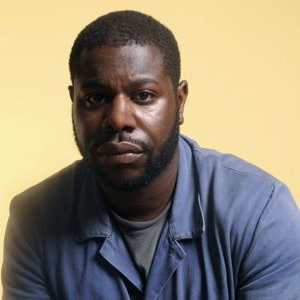
1. Steve McQueen (Hunger, Shame, Twelve Years A Slave)


Steve McQueen began his career enjoying success as an artist, which peaked with a Turner Prize win in 1999. After creating several silent, black-and-white short films, McQueen made his feature debut with Hunger in 2008. The mostly dialogue-free film, bar a seventeen-minute single take of conversation halfway through, is an immensely powerful piece chronicling the last days of Bobby Sands. McQueen’s second feature, Shame, focussed on sex addiction and was an even more exceptional work – showcasing the director’s unparalleled ability to draw great emotion from simple imagery, as well as featuring a career-best performance from Michael Fassbender. His upcoming project, Twelve Years A Slave, is set to feature a star-studded cast and follows the story of a young man sold into slavery in 19th century New York.

Friday, 1 June 2012

Lights, Camera, Action! Action! Action!

The Raid
Dir: Gareth Huw Evans
Stars: Iko Uwais, Ray Sahetapy, Yayan Ruhian


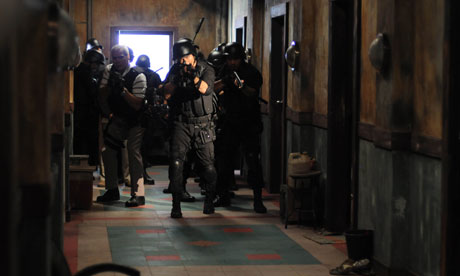
The opening of The Raid shows us a young man, Rama, praying and kissing his pregnant wife goodbye before setting off for work. Rama is one of a twenty-man SWAT police squad who are tasked with bringing down a master criminal living atop a tower block, which he has allowed to become overridden with the criminal and the destitute. From the point where the cops storm the building five minutes into the film, there is no further plot or character development – instead we are treated to an hour and a half of unrelenting action and extreme gore.

Although The Raid doesn’t pull any huge emotional punches, and is incredibly distant from its expendable characters, it is still a remarkably entertaining and action-packed film. The choreography of the fight scenes is beautifully done; with Iko Uwais and Yayan Ruhain in particular displaying admirable mastery of the Indonesian martial art Pencak Silat. Every sound, shot, wound and kick is brilliantly photographed and edited, with the action only pausing intermittently during scenes that are built on great suspense and dread. It is these moments that illustrate the impressive achievement made by director Gareth Evans, due to the success in which tension is built despite the audience’s emotional detachment to the characters on screen.

If you are looking for a balls-to-the-wall action film packed with gore, bullets and martial arts, I would heavily recommend The Raid. Considering its unknown Indonesian cast, and shoestring $1m budget, it is a much more successfully made action film than any of the Expendables cast have managed in recent years.

7/10

Friday, 25 May 2012

I Did Nazi That Coming

Iron Sky
Dir: Timo Vuorensola
Stars: Julia Dietze, Udo Kier, Christopher Kirby


After years of internet buzz surrounding its delayed Finnish-Australian-German production, I managed to finally see Iron Sky as it hit UK cinemas for one night only before its DVD release. I believe that I can safely say it is the best film about Nazis from the moon that I have ever seen.

Iron Sky begins with an American astronaut discovering a giant underground moon base, where the Nazis have been hiding out for seventy years. After his capture and interrogation, the moon Nazis must travel to earth in order to steal a mobile phone to power their outdated war machines, and pursue their maniacal plans for world domination. However, they must also confront the modernity and multiculturalism of 21st century New York, as well as the fury of the President of the United States (who happens to be Sarah Palin).

One would be forgiven for reading the plot summary of Iron Sky and expecting little more than a crass straight-to-video B-Movie. But what they may not expect is a well-written, well-produced and genuinely funny film that manages to go much further than one may expect from its premise. A far cry from the Nazisploitation movies of the 1970s such as Ilsa: She Wolf Of The SS, Iron Sky ditches the gore and torture in favour of satire – targeting both the Nazis and the UN as subjects of mockery. The film also gives hilarious nods to the likes of The Great Dictator, Dr. Strangelove and the Der Untergang internet meme, in order to connect the audience with the humour that has been found in the darker parts of history. Moreover, the film is impeccably scored and designed to give it an eerie underbudget feel reminiscent of Plan 9 From Outer Space, which is incredibly effective considering Iron Sky’s relatively modest €7.5m budget.

Although Iron Sky may not be breaking box-office records, or winning many prizes – I believe that it has the laughs, the kitsch and the timelessness to sustain a bright future as a cult favourite.

8/10

Friday, 11 May 2012

The Rise Of Joss Whedon

After a career writing for television spanning over 20 years, Joss "The Boss" Whedon has been propelled into the Hollywood limelight following the release of two films within a fortnight. The Cabin In The Woods and [The] Avengers [Assemble] are quite different films – one destined for cult status, and another a mega-budget blockbuster – yet they both exude the hallmarks of a writer with a great passion for his source material. It’s no secret that Whedon is a fanboy, and much of his television work (Buffy/Angel/Firefly) courted loyal cult followings. His big-screen directorial debut, Serenity, also displayed his ability to adapt longitudinal mythologies into fun, action-packed features. This skill of reinvention is the joy behind Cabin and Avengers, two films from overdone genres that, with a touch of Whedon magic, are original, fresh and funny.


The Cabin In The Woods

With Buffy, Whedon sought to subvert the idea of the little blonde girl in horror films who had always been the victim, and instead create a hero. In Cabin In The Woods, however, Whedon has gone a step further – creating a film in which the audience are the villain. I don’t want to give away too much of the plot to Cabin, as this comedy-horror’s strength lies in its originality and unpredictability. That said, the film is entirely constructed from overdone horror clichés, which don’t always run together smoothly. Yet there are still loads of laughs to be had from the shameful exploitation of gore, shock, sex and violence; as well as the ongoing meta-joke that the audience are pulling the strings of the action and baying for teenage blood. Whilst Cabin In The Woods isn’t perfect, it’s a hilarious and entertaining ride.
9 / 10


Avengers

Superhero movies have been flying out of the cinema at a rate of roughly one a month for the past two years. So you could be forgiven for expecting Avengers to be anything more than a group of superheroes you’ve seen before spitting out puns and fighting CGI monsters for 140mins. But surprisingly, Avengers has more to offer than that. It is clear that Whedon has a real interest in the characters and direction of the Avengers story; as the familiar heroes interact convincingly with unclichéd wit. Mark Ruffalo in particular delivers a standout performance as Bruce Banner – adding a real depth and vulnerability to a character that has been seemingly unplayable in recent years. Although there is a slight dip in momentum during the second act, the final action-packed battle sequence is hugely entertaining, and will have even the most snobbish film fan whooping like Michael Bay.
8 / 10

Wednesday, 14 March 2012

I Hate... Tim Burton


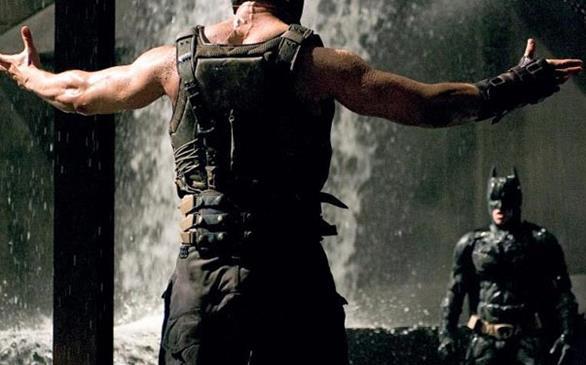
I believe that Tim Burton represents everything that’s wrong with 21st century cinema.

Since the release of Christopher Nolan’s Batman Begins in 2005, Tim Burton seems to have assumed that reinvention is remarkably simple. He takes a widely enjoyed film or play that has some kind of colourful or fantastic element, and then remakes it, billing his version as a “dark re-imagining”. However, unlike Nolan, Tim Burton isn’t interested in storytelling, breaking ground, developing technology or changing the way we think about cinema; his only goal is to squeeze as much money as possible out of pre-pubescent emo girls.

You see, what Burton actually means by “dark re-imagining” is manipulating the source material into a badly lit film in which Johnny Depp and Helena Bonham-Carter wear garish costumes and pasty make-up, and prance about acting Dickensian for 90 minutes in a world of saturated three-dimensional CGI. This method will of course always be successful because teenage emos hate staying in with their parents as much as they hate sunlight, and thus are guaranteed to spend money at the cinema.

The result is lazy, underwhelming and memory-destroying blockbusters such as Planet of the Apes, Charlie and the Chocolate Factory and Sweeney Todd assaulting our screens for years to come. Perhaps most sickening of all, the 3-D fad meant that Alice In Wonderland actually made more money at the box office than Empire Strikes Back and Return Of The Jedi combined, despite disappointing everyone who managed to stomach it.

Please Tim, stick to stop-motion, and leave my childhood alone.

Sunday, 26 February 2012

Minnie Stardust

Hunky Dory
Director: Marc Evans
Stars: Minnie Driver, Aneurin Barnard and Robert Pugh
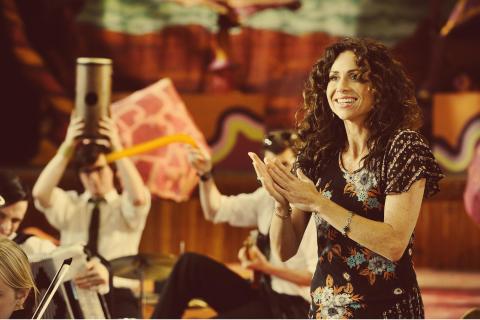
I usually despise musicals. I cringe at the sight of teenagers wearing pasted-on smiles, belting out show tunes whilst mid-conversation with stern authority figures. Yet Marc Evans’ Hunky Dory seeks to counter the contrivance of High School Musical and Glee, instead presenting us with a naturalistic drama that explores the lives of a dreamless bunch of kids in pre-Thatcher South Wales. Despite facing their last summer holiday before being destined for mediocrity, free-spirited drama teacher Vivienne May (Minnie Driver) wants her class to put on an end of year production of The Tempest “that William Shakespeare and David Bowie would be proud of” in order to give them some lasting hope of achievement.

The film follows the cast as they seek to produce a “Shakespearean concept rock opera”, despite disapproval from conservative teachers, prejudiced rugby coaches and skinhead relatives. The youngsters’ talents shine through, with the 1976 backdrop meaning ensemble performances of the likes of David Bowie, Nick Drake, ELO and The Beach Boys. There is a strong feel-good vibe to Hunky Dory, which dances between comedic musical and nostalgic drama with some success. Several character arcs map the cast’s progression through the stereotypical hurdles of adolescent strife – but all’s well by opening night, when the class perform relatively unscathed.

However, there is a great failing in Hunky Dory due to its poverty of originality. The setting and story borrow heavily from Richard Linklater’s Dazed and Confused and School of Rock, whilst the students’ individual stories aren’t given time to develop, and so seem to be pulled straight from Skins and Cemetery Junction. Perhaps Marc Evans bit off more than he could chew here. I imagine that Hunky Dory would play out quite well as a TV mini-series, and perhaps the predictable plot and two-dimensional characters may simply be a result of it being confined to 110 minutes. Nonetheless, the film is an easy watch, especially the final rendition of Life On Mars?, which is performed impeccably. Expect some warm chuckles in the hazy Welsh sunshine, but not riotous laughs. Hunky Dory won’t ever have you on the edge of your seat, but its pleasant enough to keep you in it.

6 / 10

Saturday, 25 February 2012

Original vs Remake: Willy Wonka/Charlie and the Chocolate Factory


Willy Wonka and the Chocolate Factory is a film very close to my heart. No matter how many times I watch Wonka, I still feel amazed, excited and heart-warmed by its elegance and ambition. Roald Dahl’s story of Charlie Bucket is of course familiar to everyone who didn’t spend their childhood sat in a corner eating crayons, and the charming children’s book is even more imaginative on the big screen. A superb cast of children and adults, led by the witty and whimsical Gene Wilder, adventure through impeccable set pieces in a musical masterpiece of family entertainment. A chocolate riverboat ride, singing Oompa Loompas, fizzy lifting drinks, and everlasting gobstoppers are but a few highlights in an exceptionally shot film that leaves children in awe and adults in stitches.

Then in 2005 came Charlie and the Chocolate Factory, a film that upon leaving made me want to go to court and point out on a doll of Gene Wilder exactly where Tim Burton ruined my childhood. All the subtlety and irony of the previous film was lost. The singing Willy Wonka with a twinkle in his eye became a cold and xenophobic Johnny Depp, whose every line was delivered like Michael Jackson giving a guided tour of Neverland. The Oompa Loompas and beautifully designed sets were replaced with a sickly smorgasbord of CGI. The characters ceased to be quirky and annoying eccentrics, and instead are just a detestable bunch of cretins. Perhaps worst of all, Christopher Lee is roped in to play Wonka’s dad in a needless back-story, probably because someone dared to tell Burton that he couldn’t have Saruman playing Grandpa Joe. Pretty much every aspect of the remake degraded the original. Charlie is a bad egg that needs to be dropped into the incinerator and forgotten about.

Saturday, 18 February 2012

Preview: Django Unchained


Scheduled for release at the end of 2012 is the latest film written and directed by Quentin Tarantino. Following on from stylized revenge thriller Kill Bill, and slow-burning, dialogue-rich Inglorious Basterds; Django Unchained promises to be Tarantino’s most ambitious and enthusiastic homage to exploitation cinema yet. The “Django” in the title alludes to eponymous hero of Sergio Corbucci’s 1966 spaghetti western, which was deemed so violent that it was banned by the BBFC until 1993. Corbucci’s Django was, however, a huge cult hit and spawned over thirty unofficial sequels and countless reboots and pastiches. It is perhaps unsurprising, therefore, that avid cinephile Tarantino has decided to give the story a big-budget revamp into the mainstream.

In Corbucci’s Django, the protagonist is a mysterious coffin-dragging vigilante, who marauds the Old West seeking revenge. Django Unchained, however, tells the story of a freed slave, Django (played by Jamie Foxx), who treks across the American deep south with a German bounty hunter, Dr. Schultz (Christoph Waltz), in order to emancipate his wife from the clutches of a sadistic plantation owner Calvin Candie (Leonardo DiCaprio). The supporting cast is also set to feature performances from the likes of Samuel L. Jackson, Jonah Hill, Kerry Washington, Zoe Bell, RZA, M.C. Gainey, and the original Django - Franco Nero.

So what can we expect from the latest Django? Will the big budget and all-star cast lead to a huge hit or a mega flop? Given Tarantino’s previous efforts, and considering his passion for grindhouse movies and aesthetic violence, Django Unchained promises to be an intense Southern drama filled with cool, pithy dialogue, striking set-pieces and graphic, stylised action. Whether you’re Tarantino’s biggest fan or harshest critic, one thing’s for sure - Django Unchained will certainly be a major talking point over Christmas dinner.

Monday, 12 December 2011

The Thief And The Cobbler: The Recobbled Cut

In 1964 the animator Richard Williams sought to create the greatest animated film ever made – The Thief and the Cobbler. His magnum opus was to be entirely hand-drawn, at twenty-four frames per second, and self-funded by the odd spots of television work that he could pick up along the way.

Yet, in 1990, after Williams had worked as animation director on the hugely successful Who Framed Roger Rabbit?, he managed to secure a deal with Warner Bros. to finance the independent film that had become his obsession and life’s work. However, the enormous standard of detail in every hand-drawn frame led to the constant missing of deadlines, and Warner Bros ultimately pulled out their $24m of funding leaving the film unfinished and out of Williams’ control.

The Thief was eventually acquired by Miramax, a subsidiary of Disney, who laid-off Williams’ team of animators and re-hired them to work on Aladdin. Miramax heavily edited the film; re-dubbing voice rôles by 60s icons such as Sean Connery with the likes of Matthew Broderick, and adding songs and voices to previously silent characters in order to make the film more marketable. The re-titled Arabian Knight was given a limited release in 1995, and intentionally driven into the ground so that Disney could plagiarise Williams’ plot and key characters in order to create Aladdin – thus introducing the first wholly CGI characters, and hammering the final nail into the coffin of the Golden Age of Animation.

However, after much effort from animation fans, Richard Williams’ masterpiece has now been restored using early sketches and workprints, to follow his original script as closely as possible. The Recobbled Cut is available to watch for free on YouTube, and the result is an absolute joy. Considering that the animation is now half a century old, you have to keep telling yourself that you are not watching contempory CGI. Perfectly three-dimensional cylindrical staircases, chase scenes through Escherian buildings, heart-warming and terrifying facial expressions, and impeccable detail right down to the wallpaper of impossible constructs; The Recobbled Cut is a remarkable celebration of the painstaking efforts of a perfectionist animator, and the skill and desire of his masterpiece.